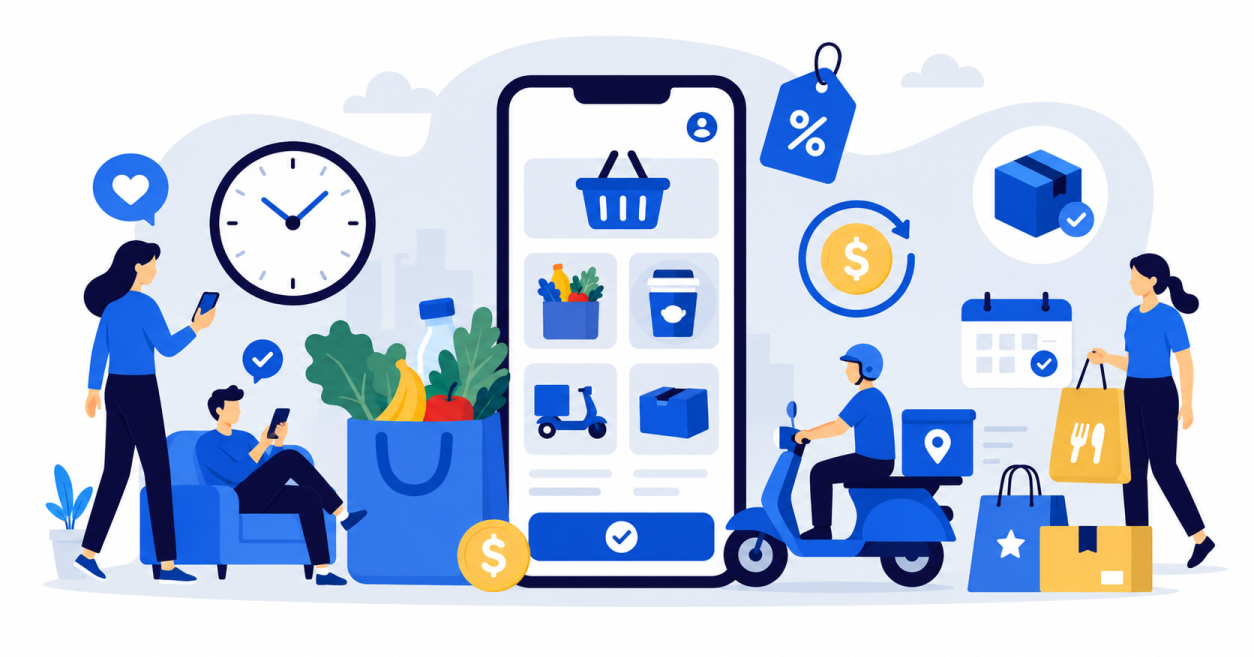
Nearly every American tapped a food delivery, takeout, or grocery delivery service in the past 30 days, according to a FinanceBuzz survey of 2,000 U.S. adults conducted with Bank of America in August 2026 — a data point that underscores just how deeply third-party convenience channels have embedded themselves in daily purchase behavior, including the daypart windows that c-store operators have long owned.
The Numbers
Ninety-seven percent of respondents used at least one convenience service in the last month, and 52% say their spending on those services has grown over the past five years. Gen Z is driving the high-frequency end: that cohort reported an average of 4.3 food delivery orders per month, nearly three times the 1.5 average logged by Baby Boomer respondents. Americans told researchers they value an hour of free time at $87 on average — more than double the $37.62 average hourly wage tracked by the Bureau of Labor Statistics — which helps explain the willingness to pay delivery premiums even as budgets tighten.
Fee sensitivity, however, is a real ceiling. Sixty-eight percent of all respondents said they had abandoned a delivery order after seeing the full cost with fees; that figure climbs to 78% among Gen Z and drops to 41% among Boomers. The average consumer will absorb $9.49 in delivery fees before defaulting to pickup — and the median answer was just $5. Despite that threshold, 85% of respondents carry at least one convenience membership, spending an average of $22 a month, or $264 a year, on subscriptions they may not fully track.
What It Means for C-Stores
For convenience-and-fuel retailers, the data maps directly to competitive dynamics on the foodservice and dispensed-beverage side. The same Gen Z cohort logging 4.3 monthly delivery orders is also the loyalty-app user most likely to engage with a c-store's mobile order-ahead or in-app promotion — if the value equation is clear. "Some people are paying for the value of the delivery, but many are paying not to think about it at all," said Melinda Sineriz, Managing Editor at FinanceBuzz. That behavioral inertia cuts both ways: operators who surface frictionless pickup options inside their loyalty programs can intercept customers right at the $9.49 fee-abandonment cliff.
The 22% of respondents who have tipped nothing on a delivery because fees already felt high signals broader margin pressure across the third-party ecosystem — pressure that makes the c-store's built-in forecourt and in-store pickup model a structural cost advantage. Chains investing in loyalty and mobile ordering and grab-and-go foodservice programs are best positioned to capture order volume that delivery fatigue shakes loose from QSR and ghost-kitchen apps.
The full methodology and findings are available at financebuzz.com/convenience-economy.
Written by Michael Politz, Author of Guide to Restaurant Success: The Proven Process for Starting Any Restaurant Business From Scratch to Success (ISBN: 978-1-119-66896-1), Founder of Food & Beverage Magazine, the leading online magazine and resource in the industry. Designer of the Bluetooth logo and recognized in Entrepreneur Magazine's "Top 40 Under 40" for founding American Wholesale Floral, Politz is also the Co-founder of the Proof Awards and the CPG Awards and a partner in numerous consumer brands across the food and beverage sector.