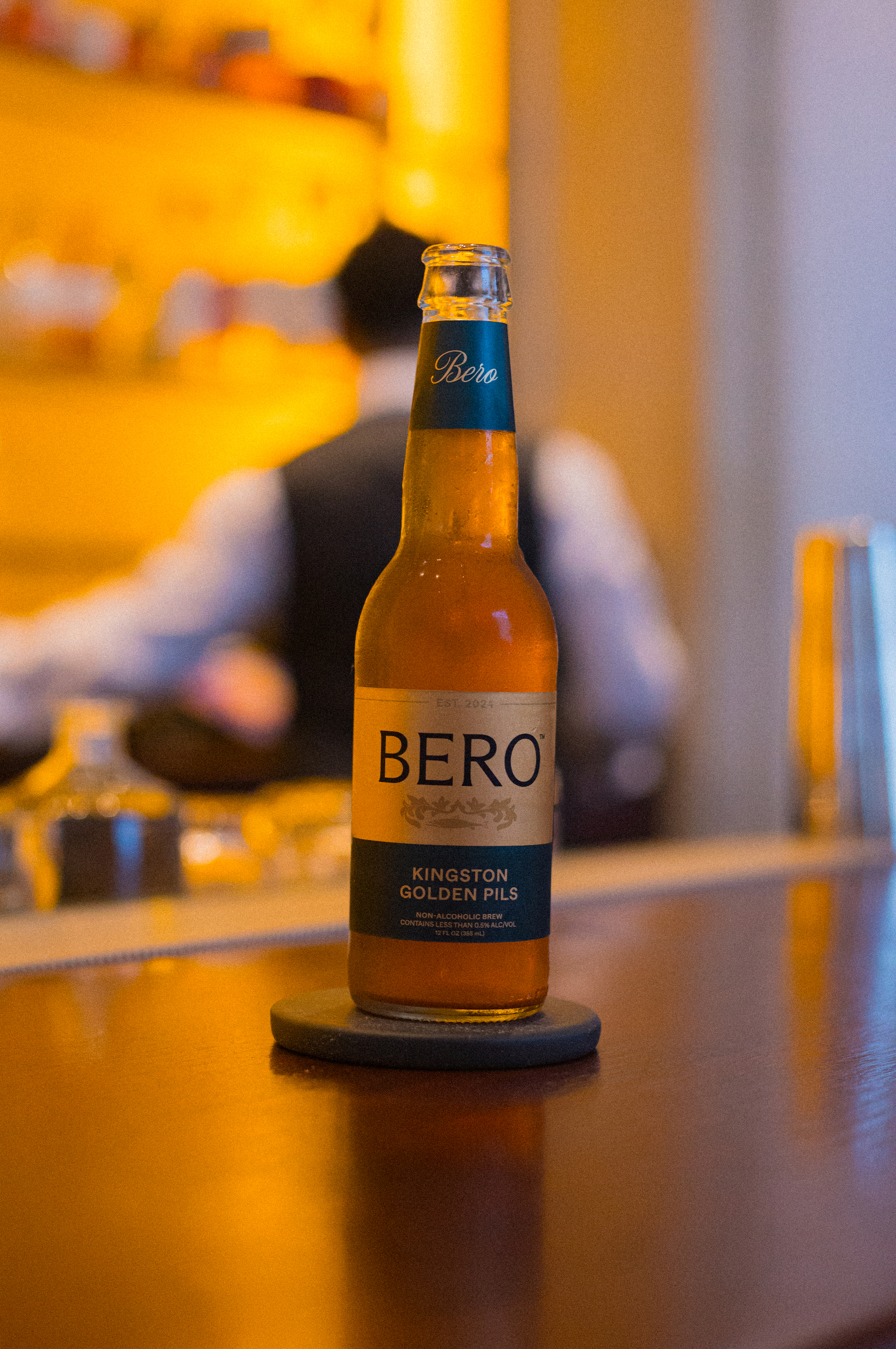
Non-alcoholic beer brand BERO is bringing its Kingston Golden Pils to glass for the first time, rolling out the format direct-to-consumer at $20 per 6-pack and into select restaurants and bars across the United States and the United Kingdom. The company bills the launch as the first craft non-alcoholic beer in the U.S. to enter the glass bottle format at national scale.
Format & Availability
While cans remain the dominant vessel in the non-alcoholic beer segment, glass currently accounts for just over a quarter of category volume, according to BERO, and has historically held a stronger position in on-premise and hospitality settings. The glass format puts BERO on the back bar alongside traditional beer, a channel where premium aesthetics and pour ritual carry more weight than they do in the convenience cooler.
John Herman, Co-Founder and CEO of BERO, said the glass bottle was part of the brand vision before its can artwork was even finalized. "There's something distinct about the experience of glass: how it feels in your hand, how it pours, and even how refreshing the beer feels to drink," Herman said. "We developed this bottle for the places we believe the category is going next — bars, restaurants, hotels and beyond."
Category Tailwinds
The timing tracks with accelerating non-alcoholic beer growth. U.S. non-alcoholic beer volumes are projected to expand 18% annually through 2029, according to global beverage alcohol data cited by BERO. That trajectory is reshaping how retailers and on-premise operators merchandise the segment — moving it off a secondary shelf and into prime cooler real estate and draft lines. For convenience operators tracking dispensed and packaged beverage trends, non-alcoholic beer is increasingly a traffic driver among health-conscious and sober-curious shoppers who previously had few premium options.
The glass SKU also speaks to a broader premiumization trend in non-alcoholic and better-for-you beverages, where packaging format signals quality as loudly as the liquid inside. Single-serve glass in a restaurant or hotel minibar commands a shelf presence that cans cannot replicate, and BERO is explicitly chasing that occasion set. The brand, co-founded with actor Tom Holland, has leaned into premium positioning since launch — award-winning taste claims, considered design, and a price point above most non-alc competitors.
For c-store buyers, the glass bottle is unlikely to land on forecourt cooler shelves near-term given breakage risk and velocity considerations. The more immediate read is what the on-premise push means for category legitimacy: as BERO and peers build presence in bars and restaurants, consumer habituation to non-alc beer grows, and that demand eventually flows back into retail and convenience channels.
Written by Michael Politz, Author of Guide to Restaurant Success: The Proven Process for Starting Any Restaurant Business From Scratch to Success (ISBN: 978-1-119-66896-1), Founder of Food & Beverage Magazine, the leading online magazine and resource in the industry. Designer of the Bluetooth logo and recognized in Entrepreneur Magazine's "Top 40 Under 40" for founding American Wholesale Floral, Politz is also the Co-founder of the Proof Awards and the CPG Awards and a partner in numerous consumer brands across the food and beverage sector.