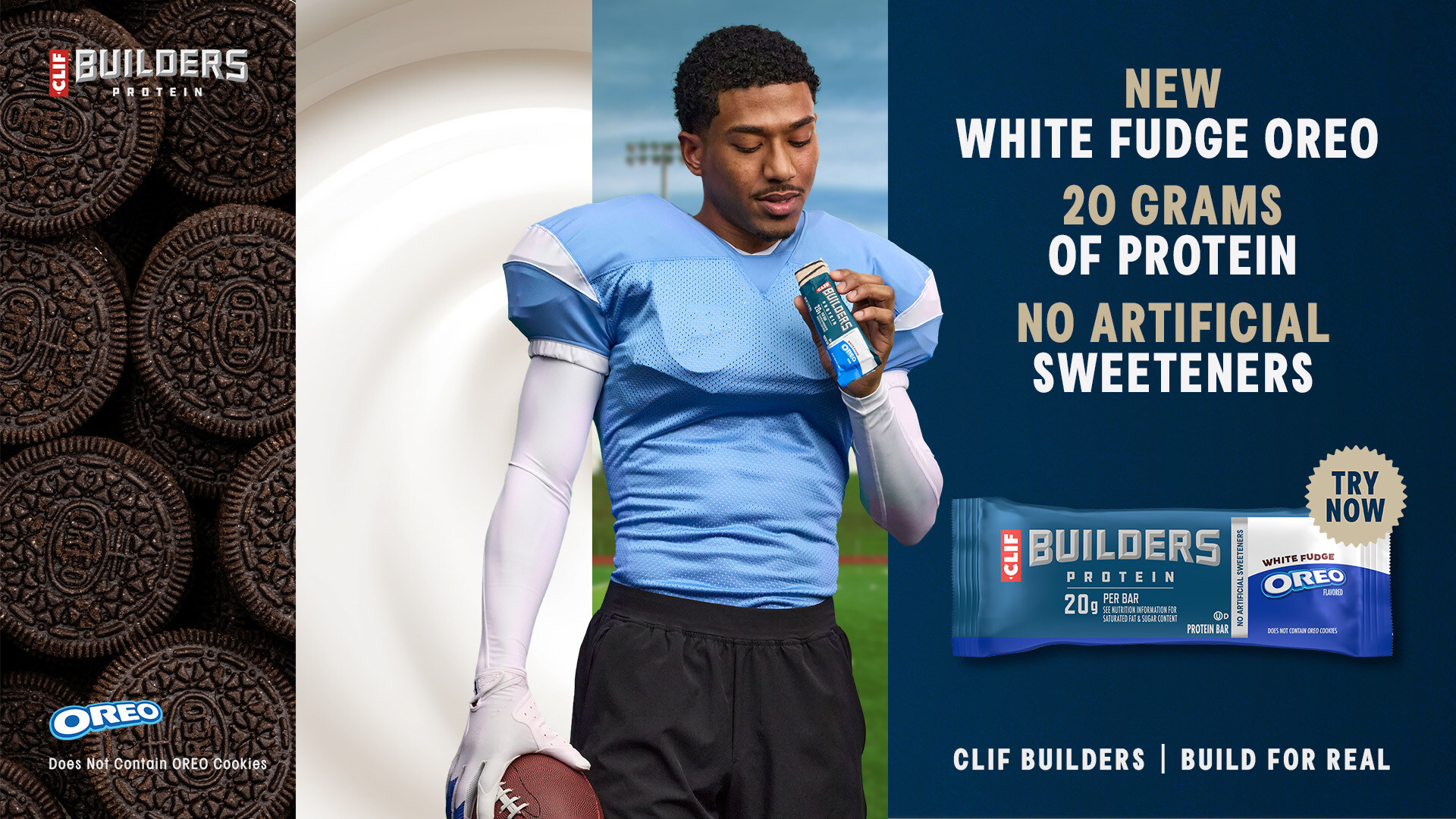
Mondelez International is rolling out a White Fudge OREO-flavored variety under its Clif Builders protein bar line, adding a licensed-flavor SKU to a category that has become one of the stronger impulse performers in the convenience channel's center-store set. The bar delivers 20 grams of plant-based protein per unit and is positioned squarely at post-workout recovery shoppers — a consumer who increasingly makes the forecourt a first stop after the gym.
The flavor draws directly on the OREO white fudge covered sandwich cookie, giving Mondelez a dual brand-equity play: Clif Builders' existing foothold in sports nutrition and OREO's broad household recognition. For operators, that name recognition on-pack can move product off a crowded single-serve bar fixture without heavy in-store marketing support.
Protein bars have held up well in convenience even as broader center-store snack velocity has softened. NACS data has consistently shown that health-and-wellness snacks — particularly high-protein formats — index above average for basket-attachment when placed near the register or in a dedicated nutrition set. Single-store operators and regional chains alike have expanded cooler and ambient space for functional snacks over the past two years as they look to grow inside-sales mix beyond fuel-driven traffic.
The plant-based protein positioning also aligns with a broader reformulation trend in the segment, as brands look to appeal to flexitarian shoppers without alienating the conventional sports-nutrition buyer. Whether that message resonates in a c-store environment — where the purchase decision often takes under 30 seconds — will depend heavily on placement, price-point execution, and whether operators slot it alongside comparable 20g-protein competitors or bury it in a mixed snack section.
Mondelez has not disclosed suggested retail pricing or confirmed which retail channels will carry the new bar at launch, but the Clif brand has strong existing distribution through convenience, grocery, and natural channels. Operators evaluating the SKU should weigh velocity data from comparable licensed-flavor protein bars — a format that has shown both strong initial lift and faster fade than heritage flavors — before committing significant planogram real estate. For chains running a foodservice and better-for-you program, the bar fits naturally as a bundled upsell alongside dispensed beverage or fresh-grab offerings.
Written by Michael Politz, Author of Guide to Restaurant Success: The Proven Process for Starting Any Restaurant Business From Scratch to Success (ISBN: 978-1-119-66896-1), Founder of Food & Beverage Magazine, the leading online magazine and resource in the industry. Designer of the Bluetooth logo and recognized in Entrepreneur Magazine's "Top 40 Under 40" for founding American Wholesale Floral, Politz is also the Co-founder of the Proof Awards and the CPG Awards and a partner in numerous consumer brands across the food and beverage sector.