The Product
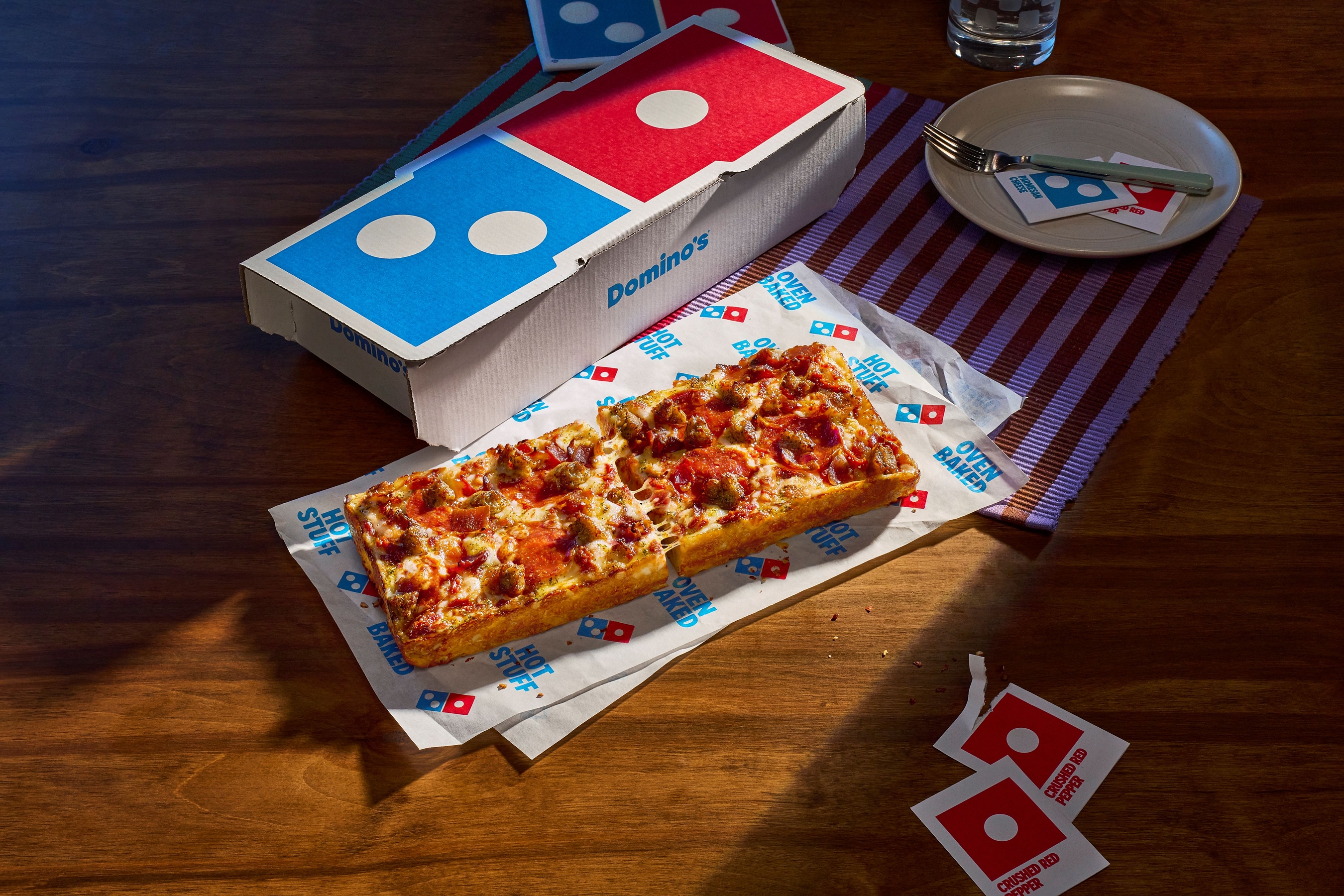
Domino's Pizza is adding a single-serve Detroit-style pie to its national menu on Aug. 31, calling the item the Domino and positioning it as a direct answer to the shared-pizza problem — the friction that arises when dining groups can't agree on toppings. The move lands across more than 22,500 locations in over 90 markets, making it one of the chain's broadest simultaneous product rollouts in recent memory.
The Domino is shaped like the brand's rectangular logo tile, cut into two slices, and built on a buttery-flavored pan dough encrusted with real Parmesan cheese — the same style that gives Detroit-style pies their signature crispy edge. Guests choose their sauce, add up to three toppings, and receive a two-layer cheese base finished with Domino's garlic seasoning drizzle. Entry price is $6.99 per item under the Mix and Match Deal, which requires selecting any two or more qualifying menu items; prices vary by location.
Why It Matters
The personal-pizza format has long been a contested segment in both QSR and convenience foodservice. C-store chains including Casey's and Sheetz have invested heavily in made-to-order pizza programs precisely because the category travels well, holds margin, and satisfies the solo lunch occasion — the same daypart Domino's is explicitly targeting with the Domino. For convenience foodservice operators watching the competitive landscape, a nationally marketed, individually portioned pizza at sub-$7 from the world's largest pizza chain sharpens the value benchmark.
Joe Jordan, chief operating officer, president of Domino's U.S., and incoming CEO, framed the launch in portfolio terms: "When everyone wants something different, traditional pizza falls short. The Domino lets every person build the exact pizza they want." Independent consumer testing, according to the company, rated the item among the most well-received products Domino's has introduced. The chain did not disclose testing methodology or sample size.
Scale and Context
Domino's reported global retail sales of more than $20.6 billion in the trailing four quarters ended June 14, 2026, with more than 85% of U.S. retail sales in 2025 flowing through digital channels. Its franchise base — 99% of the system — gives the Domino near-instant national distribution without the capital drag of company-owned builds. That footprint creates a value-perception ceiling for competing foodservice-at-cstore programs to work against, particularly on price-per-person metrics at lunch and late-night.
Detroit-style pizza has expanded steadily beyond its regional base over the past several years, appearing on menus at Little Caesars, Pizza Hut, and independent operators. Domino's is the latest major chain to standardize the format, betting that the thick, crisped-edge crust and rectangular shape will read as premium to consumers accustomed to thin-crust delivery rounds.
Written by Michael Politz, Author of Guide to Restaurant Success: The Proven Process for Starting Any Restaurant Business From Scratch to Success (ISBN: 978-1-119-66896-1), Founder of Food & Beverage Magazine, the leading online magazine and resource in the industry. Designer of the Bluetooth logo and recognized in Entrepreneur Magazine's "Top 40 Under 40" for founding American Wholesale Floral, Politz is also the Co-founder of the Proof Awards and the CPG Awards and a partner in numerous consumer brands across the food and beverage sector.