The Store & Market Gap
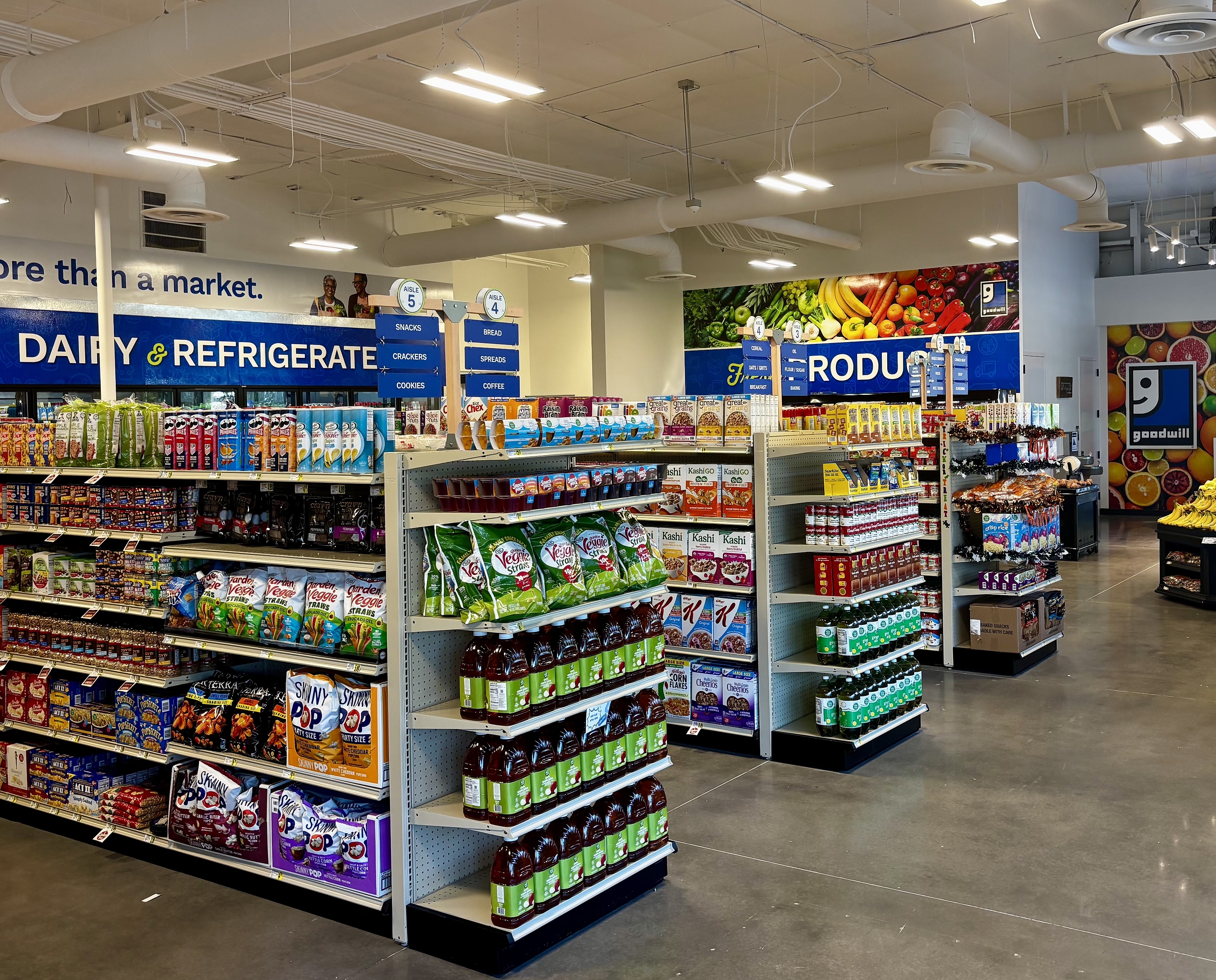
Goodwill Industries of Eastern North Carolina (GIENC) opened its 7,600-square-foot Goodwill Community Cupboard on Sept. 10 at 150 South 5th Street in Aurora, N.C., inside the Brantley Tillman Opportunity Center. The format carries fresh fruits and vegetables, proteins, non-perishable staples, and other grocery essentials — categories that have been effectively unavailable to Aurora residents without a significant drive.
Aurora and surrounding Richland Township qualify as a USDA-designated food desert: in rural areas, that threshold requires at least 33% of the population to live more than 10 miles from a supermarket or large grocery store. The Community Cupboard is designed to close that distance gap, operating under GIENC's broader Goodwill Feeds initiative, which also includes food-kit distributions and a partnership with TABLE, an Orange County nonprofit whose Chefs@Home program serves school-age children experiencing food insecurity.
Format & Programming
The location is more than a retail food outlet. An embedded community room will host STEAM-related programming, and the site connects to GIENC's workforce development and employment services already operating in nearby Washington, N.C. GIENC also distributes grants to local nonprofits in Beaufort County through its Community Empowerment Program — meaning the cupboard functions as a hub for wraparound services alongside its grocery mission.
"When families have more reliable access to healthy food, children are better equipped to learn, adults are more reliable at work, and seniors can remain independent longer," said Christopher Hash, GIENC president and CEO. Hash framed the cupboard as the "physical manifestation" of the organization's mission of transforming lives through opportunities.
Channel Context
The Aurora opening is a reminder that food-desert gaps increasingly attract operators outside the traditional grocery and convenience channels. For c-store retailers, rural food deserts represent both a competitive and a community-relations consideration: NACS data consistently shows that convenience stores serve as the primary food retail point of access in many rural U.S. markets, and formats that add fresh produce and full grocery assortments — whether operated by nonprofits, independents, or regional chains — reshape the local competitive landscape.
GIENC operates 43 employment program centers across 51 counties in eastern North Carolina, giving the organization substantial logistical reach to potentially scale the Community Cupboard concept. No additional locations have been announced, but Hash indicated that reducing food deserts across eastern North Carolina is an explicit organizational goal. Operators and foodservice-at-cstore planners in the region should track whether the Goodwill Feeds model expands — and whether it draws shoppers who might otherwise stop at a nearby fuel-and-convenience forecourt for their daily food needs.
Written by Michael Politz, Author of Guide to Restaurant Success: The Proven Process for Starting Any Restaurant Business From Scratch to Success (ISBN: 978-1-119-66896-1), Founder of Food & Beverage Magazine, the leading online magazine and resource in the industry. Designer of the Bluetooth logo and recognized in Entrepreneur Magazine's "Top 40 Under 40" for founding American Wholesale Floral, Politz is also the Co-founder of the Proof Awards and the CPG Awards and a partner in numerous consumer brands across the food and beverage sector.