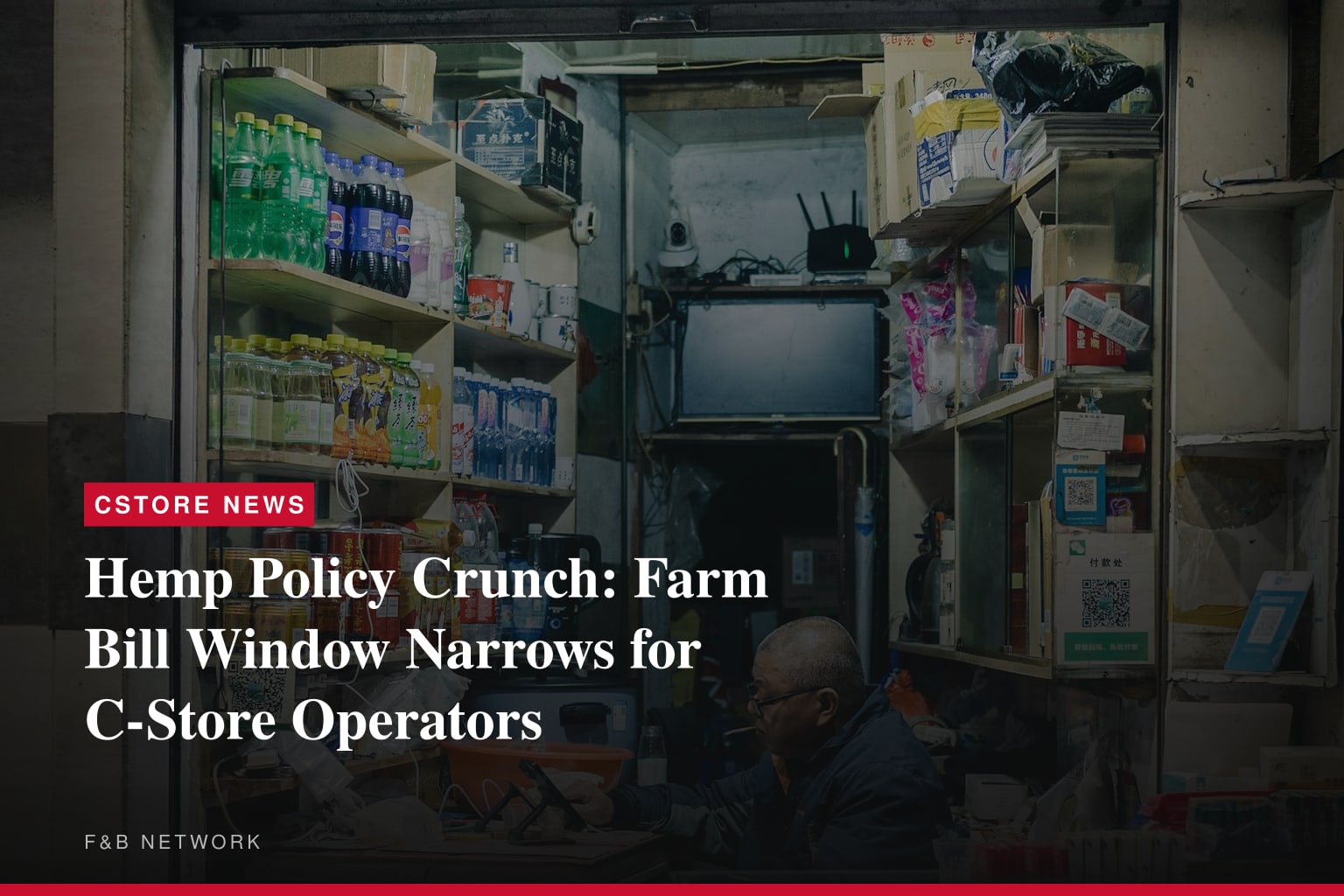
Industrial hemp operators and advocacy groups are sounding the alarm that the congressional window to shape hemp policy in the next Farm Bill is measured in weeks, not months — and that convenience retailers with hemp-derived products on their planograms have a direct stake in the outcome.
Morgan Tweet, CEO and co-founder of Montana-based fiber and grain hemp company IND HEMP and executive director of the Hemp Industries Association affiliate HEMI, argues the industry cannot afford to sit out the lobbying cycle. The concern is twofold: punitive tax treatment of industrial hemp at the federal level, and regulatory language that could restrict the cannabinoid-infused beverages, functional snacks, and topicals that have quietly carved out shelf space in thousands of forecourt retailers over the past three years.
For c-store operators, the stakes are concrete. Hemp-derived CBD and delta-9 THC beverages have become a meaningful incremental ring in the dispensed-and-packaged beverage set, particularly in states where traditional cannabis remains off-limits. Single-store operators (SSOs) in rural markets — precisely the footprint IND HEMP's Montana grain-and-fiber base serves — have leaned into hemp functional drinks as a differentiated alternative to the energy-shot segment. Any federal reclassification that tightens THC thresholds or layers on excise treatment similar to tobacco could compress margins or force delistings mid-planogram cycle.
The channel has navigated regulatory whiplash before. When the 2018 Farm Bill opened the door to hemp-derived CBD, operators scrambled to build sets without clear FTC or FDA enforcement guidance. Many of those same retailers are now watching the 2025 Farm Bill reauthorization process with the same mix of opportunity and anxiety. Industry groups aligned with NACS have flagged hemp-beverage compliance as an emerging operational burden, particularly around age-verification requirements that vary state to state.
Tweet's broader argument — that fiber and grain hemp producers are collateral damage in a policy debate dominated by cannabinoid commerce — resonates in the supply chain. C-store foodservice programs and packaging suppliers that source hemp-based materials could face cost pass-throughs if federal tax proposals treat industrial hemp inputs the same as controlled substances. That is an outcome the industry, and the retailers it supplies, can least afford heading into a margin-compressed operating environment.
With markup sessions expected before the August recess, hemp stakeholders are urging operators, distributors, and category managers to engage their congressional representatives now. The category's shelf presence in convenience may depend on it.
Written by Michael Politz, Author of Guide to Restaurant Success: The Proven Process for Starting Any Restaurant Business From Scratch to Success (ISBN: 978-1-119-66896-1), Founder of Food & Beverage Magazine, the leading online magazine and resource in the industry. Designer of the Bluetooth logo and recognized in Entrepreneur Magazine's "Top 40 Under 40" for founding American Wholesale Floral, Politz is also the Co-founder of the Proof Awards and the CPG Awards and a partner in numerous consumer brands across the food and beverage sector.