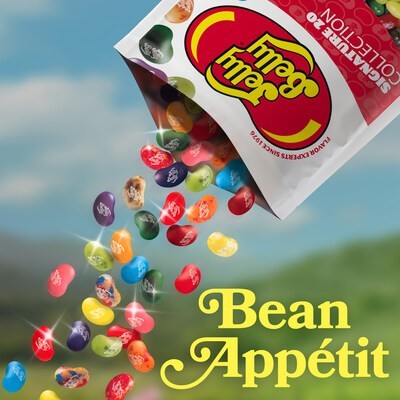
Jelly Belly is making its play for Gen Z. The Fairfield, California-based confectioner—best known for turning Ronald Reagan into a jelly bean evangelist in the 1980s—just rolled out its Bean Appétit campaign, a full-court press built around curated flavor collections and social-first content aimed at younger consumers who expect brands to deliver both nostalgia and discovery.
The brand is leaning hard into what it does best: true-to-life flavors. From Very Cherry to Buttered Popcorn, each bean is engineered to taste like the real thing, not some generic fruit approximation. Jelly Belly is packaging that heritage into five new collections: the Signature 10 and Signature 20 (core flavors including Strawberry Jam, Lemon, Cotton Candy, and Vanilla Bean), plus seasonal sets like Endless Summer, Farmstand Fruit, and Tropical Paradise, which adds Piña Colada and Chili Mango to the mix. It's a smart segmentation move—offer entry points for casual buyers while giving flavor obsessives something to hunt down.
The campaign isn't just about product. Jelly Belly is flooding TikTok and Instagram with short-form video content designed to spark sharing and discovery. The brand is working with influencers and leaning into the visual storytelling that moves the needle with digital-native audiences. It's a necessary pivot: younger consumers don't just buy candy, they buy moments they can post. Jelly Belly is betting that gourmet jelly beans—positioned as a playful, social snack—can compete for attention in a crowded confection aisle.
The timing matters. Flavor innovation is no longer a nice-to-have in the candy category; it's table stakes. Consumers under 35 are actively seeking brands that offer sensory experiences, not just sugar hits. They want authenticity, unexpected combinations, and products that feel like they were made for them, not their parents. Jelly Belly's 116-year-old brand equity gives it credibility, but only if it can prove it's still relevant.
The real test will be whether this repositioning moves volume. Candy is impulse-driven, and shelf space is brutal. Jelly Belly has name recognition, but so does every other heritage brand trying to stay relevant in a market where limited-edition drops and collaborations dominate the conversation. If the curated collections drive trial and the digital campaign converts views into purchases, this could be a blueprint for how legacy confectioners stay competitive. If not, it's just another refresh that didn't stick.