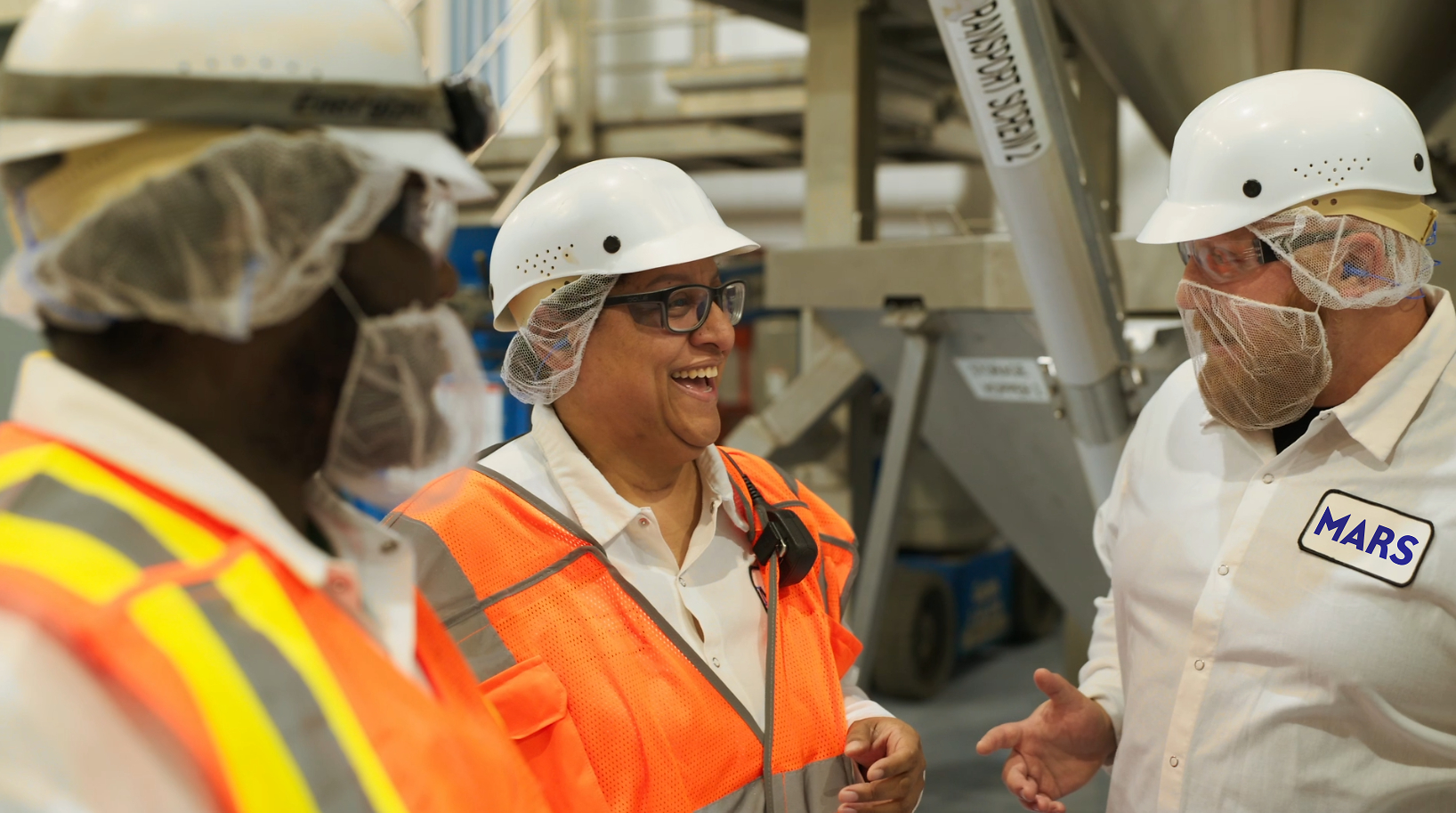
Mars, Incorporated is committing $1.4 billion to U.S. manufacturing and operations in 2027, the largest single-year domestic investment in the company's 115-year history. The outlay spans candy production in Texas, frozen-snack lines in Utah, wet pet food capacity in Ohio, and four new veterinary hospitals across three states — all categories with meaningful convenience-channel shelf presence.
The announcement builds on more than $9 billion Mars has deployed across U.S. operations since 2017. Combined with 15 facilities added through last year's Kellanova acquisition — which brought Pringles and Cheez-It into the portfolio — the company now operates more than 60 U.S. factories, research labs, and offices, plus over 2,000 veterinary clinics and hospitals.
Snack Lines and Capacity
For c-store buyers, the most directly relevant investments land in the candy and snack aisles. Mars is putting $60 million toward two dedicated Trü Frü frozen-fruit manufacturing lines inside its $240 million Salt Lake City facility, which opened in 2025 to produce Nature's Bakery bars. The Utah site will now carry capacity for 17 million Trü Frü frozen products annually alongside more than 1 billion Nature's Bakery snack bars per year — a scale that positions Mars to push broader freezer-door distribution at forecourt-adjacent formats.
In Waco, TX — which is marking 50 years of operation this month — Mars has directed $165 million since 2024 toward energy efficiency and line upgrades. The plant turns out more than 56 billion pieces of SNICKERS, STARBURST, and SKITTLES annually and recently supported the rollout of the SNICKERS Xtreme Almond bar and STARBURST Sour extensions, two SKUs that have landed on c-store impulse racks. Those candy brands consistently rank among the top-selling single-serve items at the dispensed-beverage and candy counter, making production reliability at Waco a supply-chain issue for operators.
A $49 million investment at Mars' Columbus, OH wet pet food facility is bringing TEMPTATIONS Lickable Treats production onshore, adding capacity for over 400 million pouches annually. Mars has now invested $162 million in that site since 2022. Pet-care accessories and treats have become a growing grab-and-go segment at larger-format c-stores, and domestic production bolsters in-stock consistency for that set.
Veterinary and Outlook
On the services side, Mars will spend more than $34 million early in 2027 to open three new BluePearl Pet Hospitals in Ellicott City, MD, and Austin and Katy, TX, plus a Banfield Pet Hospital in Wilmington, NC. The four facilities are projected to create up to 195 jobs and add emergency and specialty veterinary capacity in high-growth suburban markets.
"Our continued investments build for the future — expanding our manufacturing capabilities, accelerating growth across our portfolio and services and ensuring we can meet the evolving needs of consumers for generations to come," said Claus Aagaard, CFO of Mars, Incorporated.
With 94% of Mars products sold in the U.S. made domestically, the company frames the $1.4 billion commitment as both a supply-chain resilience play and a hedge against trade-cost volatility — a calculation that resonates for c-store category managers who have navigated candy-price inflation and periodic out-of-stocks over the past several years. The Kellanova integration adds further scale: Pringles and Cheez-It are top-indexed salty-snack performers in the convenience channel, and modernizing those inherited facilities is a stated priority for Mars going forward.
Written by Michael Politz, Author of Guide to Restaurant Success: The Proven Process for Starting Any Restaurant Business From Scratch to Success (ISBN: 978-1-119-66896-1), Founder of Food & Beverage Magazine, the leading online magazine and resource in the industry. Designer of the Bluetooth logo and recognized in Entrepreneur Magazine's "Top 40 Under 40" for founding American Wholesale Floral, Politz is also the Co-founder of the Proof Awards and the CPG Awards and a partner in numerous consumer brands across the food and beverage sector.