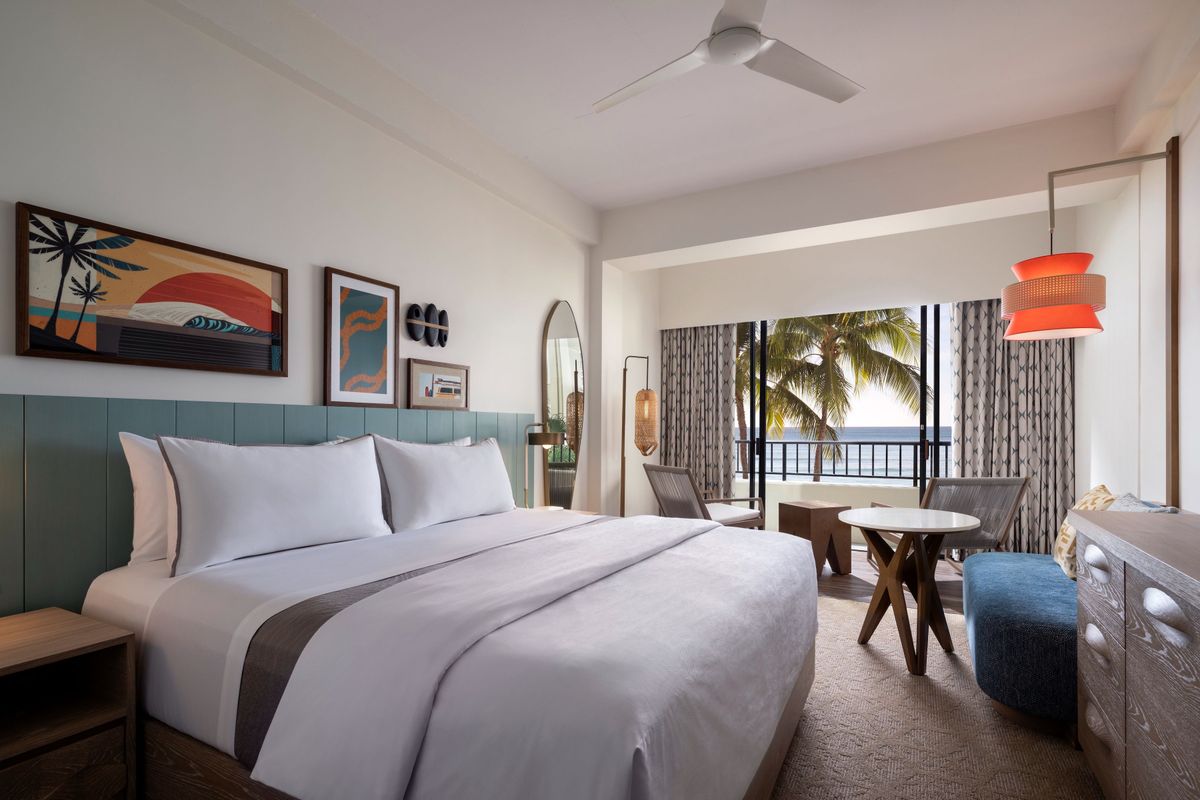
The Moana Surfrider, A Westin Resort & Spa, just wrapped a multimillion-dollar overhaul that touches all 791 rooms, adds a new oceanfront event space, and doubles down on Hawaiian cultural programming. It's a calculated bet that you can modernize a 125-year-old property without erasing what made it matter in the first place.
The former Diamond Wing is now the Surfrider Wing, reimagined with surf-culture-inspired interiors, local artwork, and balcony setups built for long afternoons watching the water. The Tower Wing leans residential—think custom seating, dining nooks, beachfront views. The Banyan Wing, dating to 1901, keeps its Victorian bones but gains modern furniture and limu-inspired art that doesn't fight the architecture.
The public spaces got the same treatment: lobby refresh, new ground-floor event venue in the Tower Wing that can pivot from intimate receptions to full-scale corporate bookings. WCIT's Lisa-Maria Priester and Bev Tagami led the design, prioritizing place-making over template hospitality. It shows.
Beyond the hardware, the Moana launched "Moana Calls," a quarterly music series featuring artists like Robert Cazimero, and "Voices of the Moana," a video series profiling Hawaii-based creators. It's cultural engagement that actually engages, not lobby signage about respecting local customs.
This renovation matters because it's a test case: Can heritage properties evolve without becoming generic luxury boxes? The Moana's answer is yes, if you're willing to invest in specificity—local art, local music, local design cues—and resist the urge to sand down every edge. For operators watching their own historic assets age, this is the playbook.