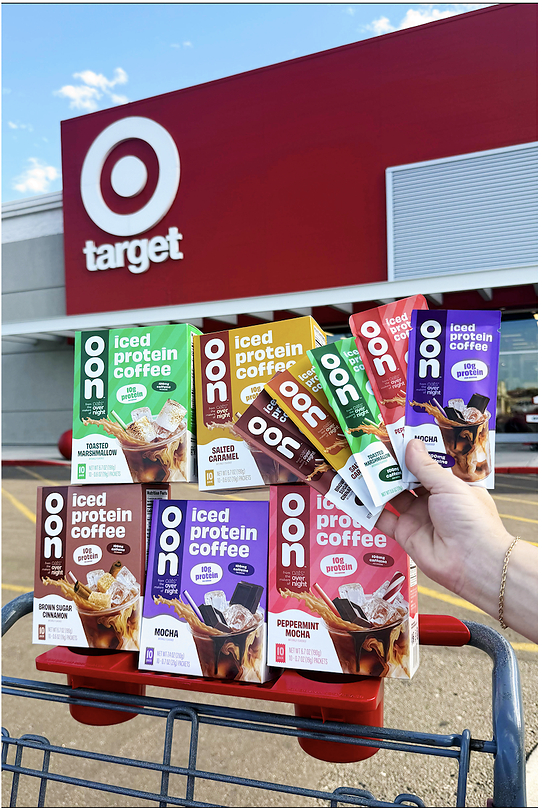
Oats Overnight is stepping outside oatmeal for the first time, landing its new Oon Iced Protein Coffee on shelves at approximately 1,310 Target stores nationwide and on Target.com as an exclusive retail launch.
The single-serve stick pack dissolves in eight ounces of cold water with a stir or shake — no frother, blender, or coffee maker required. Each pack delivers 10 grams of protein and 100 milligrams of caffeine, formulated with medium-roast, 100% Colombian Arabica beans and real cane sugar. The brand positioned the product squarely against the growing grab-and-go, high-protein beverage segment that has become one of the faster-moving categories in mass and convenience channels.
Flavors and Pricing
The Target assortment launches with five flavors: Mocha, Salted Caramel, Brown Sugar Cinnamon (a Target exclusive), Toasted Marshmallow (holiday), and Peppermint Mocha (holiday). Both 10-count boxes at $19.99 and individual stick packs at $2.19 are available, sitting on dedicated coffee displays and in the coffee aisle. Select locations will run in-store sampling programs this November and again in January 2027.
The $2.19 single-unit price point puts Oon squarely in impulse-buy territory — a range that convenience operators know well from dispensed-beverage add-ons and functional single-serve SKUs. For comparison, ready-to-drink protein coffees from established brands typically shelf at $3.00–$4.50 per unit in the c-store cooler door, giving a powder-format SKU a meaningful price advantage for budget-conscious shoppers.
Channel and Category Context
Protein-fortified beverages have been among the most consistent growth drivers in the functional food and beverage space. NACS data has consistently shown that health-and-wellness SKUs — particularly those bridging the morning daypart with protein claims — outperform center-store averages in convenience. The stick-pack format also aligns with an operational trend: retailers from grocery to c-store increasingly dedicate fixture space to powder-based single-serves that carry lower shrink risk than chilled RTD formats and require no cold-chain management.
Oatsovernight.com says the company developed Oon through multiple rounds of subscriber feedback before bringing it to retail — a direct-to-consumer-first development model that more functional food brands are using to validate SKUs before committing to brick-and-mortar placement. Brian Tate, founder and CEO of Oats Overnight, called coffee "a natural next step" given the brand's focus on convenient, high-protein nutrition. "Our community has been asking for more products that fit their lifestyles," Tate said, "and Oon Iced Protein Coffee brings great taste and added protein to a daily ritual they already love."
For c-store buyers and category managers tracking the protein-coffee crossover, the Target exclusivity window is worth watching. Brands that validate velocity in mass before broadening distribution — particularly at the $2–$3 single-unit threshold — have historically been strong candidates for c-store planogram consideration in the functional beverage or better-for-you snack set. The no-equipment prep story also maps well to foodservice-adjacent grab-and-go endcaps that many operators are building out near the dispensed beverage station.
Operators looking to track emerging protein-coffee SKUs entering retail can follow category movement in the functional beverage corridor, where velocity data from mass channels often presages c-store ranging decisions within 12–18 months.
Written by Michael Politz, Author of Guide to Restaurant Success: The Proven Process for Starting Any Restaurant Business From Scratch to Success (ISBN: 978-1-119-66896-1), Founder of Food & Beverage Magazine, the leading online magazine and resource in the industry. Designer of the Bluetooth logo and recognized in Entrepreneur Magazine's "Top 40 Under 40" for founding American Wholesale Floral, Politz is also the Co-founder of the Proof Awards and the CPG Awards and a partner in numerous consumer brands across the food and beverage sector.