The Concept
Corner Bakery Cafe has opened a relocated, retro-inspired unit in West Plano, Texas, that the fast-casual chain says was built for half the cost of a traditional Corner Bakery buildout — establishing a replicable prototype for franchisees looking to open or relocate with tighter capital requirements.
The 2100 Dallas Pkwy site was selected to capture commuter traffic and serve nearby schools and businesses, a daypart-diverse positioning that aligns with Corner Bakery's breakfast-through-dinner menu. The chain operates in 18 states and Washington, D.C., and is owned by SSCP, a Dallas-based multiunit restaurant enterprise.
Lower Investment, Franchise Logic
The cost reduction was achieved through a combination of purchasing leverage and disciplined spec selection. Procuring equipment through SSCP's multibrand network helped secure competitive pricing, while careful curation of fixtures, furniture, and construction materials trimmed costs without sacrificing finish quality. The result is a unit economics story the brand is positioning directly at prospective franchisees.
"In today's environment, a new cafe has to make financial sense from the start," said Erin Hasselgren, president of Corner Bakery Cafe. "Building with a clear return on investment in mind puts us in a stronger position to pursue the right growth opportunities."
That framing matters in the current fast-casual development environment, where rising construction costs and labor inflation have pressured single-unit and regional franchise operators. Concepts that can demonstrate a credible path to ROI at the unit level — not just system-wide — are finding it easier to attract qualified franchisees.
Design and Operations
Beyond the financials, the West Plano prototype reflects how dining-room use has shifted. Longer communal tables, additional power outlets, and an open, well-lit footprint accommodate working lunches and informal meetings — a nod to the blurring of foodservice and workspace that fast-casual operators have been navigating since 2020.
Back-of-house changes were informed directly by crew input from the previous cafe location. Employees suggested layout adjustments to improve workflow efficiency, and the kitchen design was also evaluated against the growing complexity of fulfillment: dine-in, pickup, and third-party delivery all require different traffic patterns and staging capacity. Getting those flows right at the prototype stage reduces operational friction for future builds.
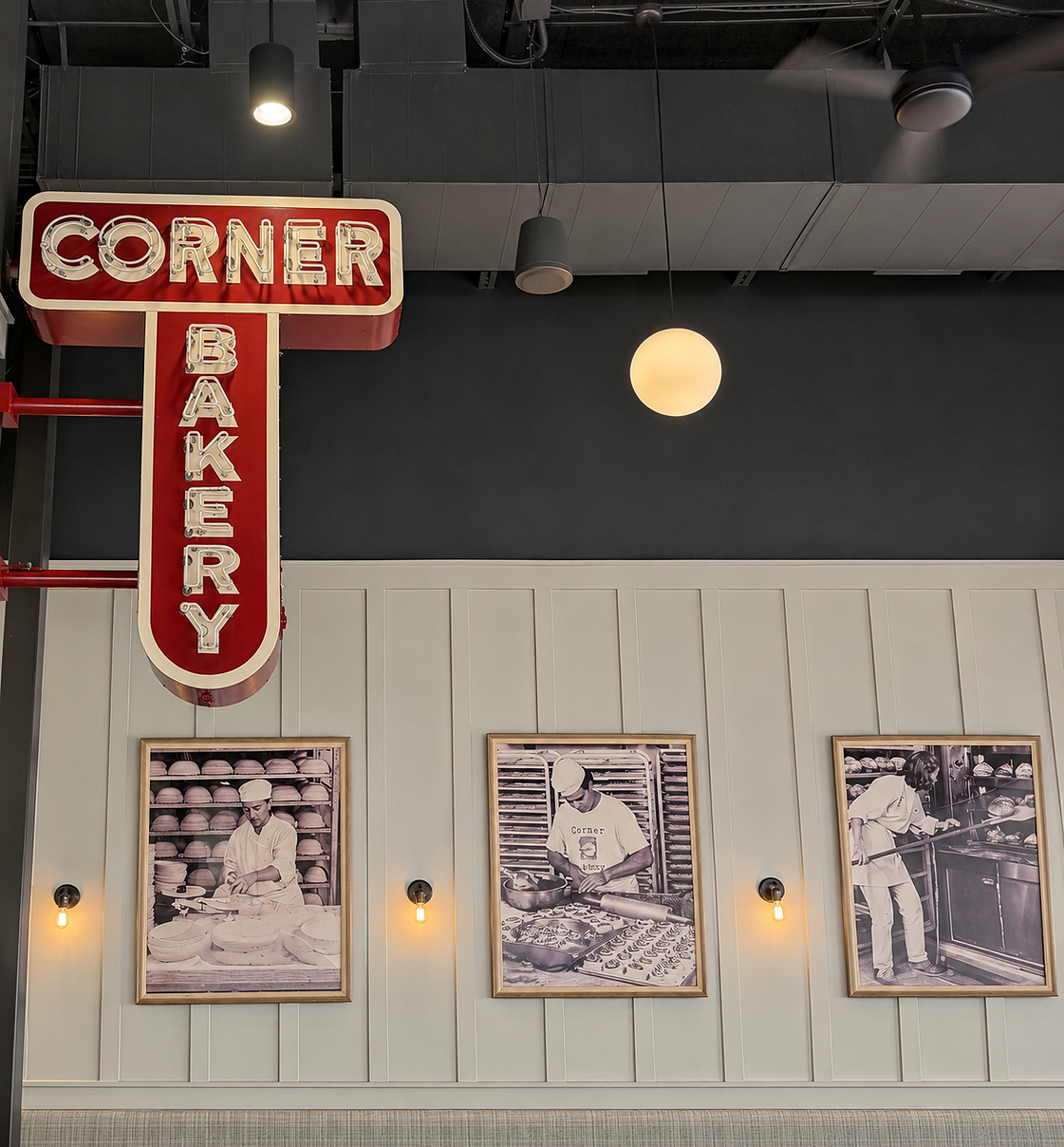
Original artwork and decor — including the iconic "T" sign from Corner Bakery's first Chicago location, where the brand launched in 1991 as a neighborhood bakery — tie the updated design back to the chain's heritage. That brand storytelling is intentional: for a 30-year-old fast-casual concept relaunching its development engine, connecting new units to the founding identity can reinforce franchisee and guest confidence alike.
Written by Michael Politz, Author of Guide to Restaurant Success: The Proven Process for Starting Any Restaurant Business From Scratch to Success (ISBN: 978-1-119-66896-1), Founder of Food & Beverage Magazine, the leading online magazine and resource in the industry. Designer of the Bluetooth logo and recognized in Entrepreneur Magazine's "Top 40 Under 40" for founding American Wholesale Floral, Politz is also the Co-founder of the Proof Awards and the CPG Awards and a partner in numerous consumer brands across the food and beverage sector.
Frequently Asked Questions
What was the actual build cost reduction Corner Bakery achieved at the West Plano location?
Corner Bakery cut construction costs in half compared to a traditional buildout by leveraging SSCP's multibrand purchasing network for equipment and strategically selecting fixtures and materials without compromising finish quality. The 2,100-square-foot West Plano unit at 2100 Dallas Pkwy became the chain's replicable prototype for franchisees facing tighter capital requirements.
How many states does Corner Bakery currently operate in?
Corner Bakery operates in 18 states plus Washington, D.C., under parent company SSCP, a Dallas-based multiunit restaurant operator. The chain positions itself as a daypart-diverse concept with breakfast-through-dinner positioning.
What specific purchasing strategy enabled the cost savings?
SSCP's network of multiple restaurant brands created procurement leverage for competitive equipment pricing, while disciplined spec selection on fixtures, furniture, and construction materials reduced overall costs. This approach let Corner Bakery maintain finish quality while cutting expenses.
Why is Corner Bakery's unit economics pitch resonating with franchisees right now?
Rising construction costs and labor inflation have pressured single-unit and regional franchise operators, making concepts that demonstrate credible unit-level ROI paths—not just system-wide metrics—significantly more attractive. Corner Bakery's half-cost prototype directly addresses this franchisee concern in today's development environment.
What was the strategic rationale for the West Plano location?
The 2100 Dallas Pkwy site was selected to capture commuter traffic while serving nearby schools and businesses, supporting Corner Bakery's daypart-diverse menu positioning. This location selection reinforces the chain's strategy to drive traffic across breakfast, lunch, and dinner periods.