Two restaurant technology vendors are joining forces to close the gap between front-of-house point-of-sale data and back-of-house operational intelligence. Decision Logic and CBS NorthStar announced a partnership that integrates CBS NorthStar's POS and order management platform with Decision Logic's inventory, labor, and food cost tools — giving multi-unit operators a consolidated view of their business without manual data transfers between systems.
What the Integration Does
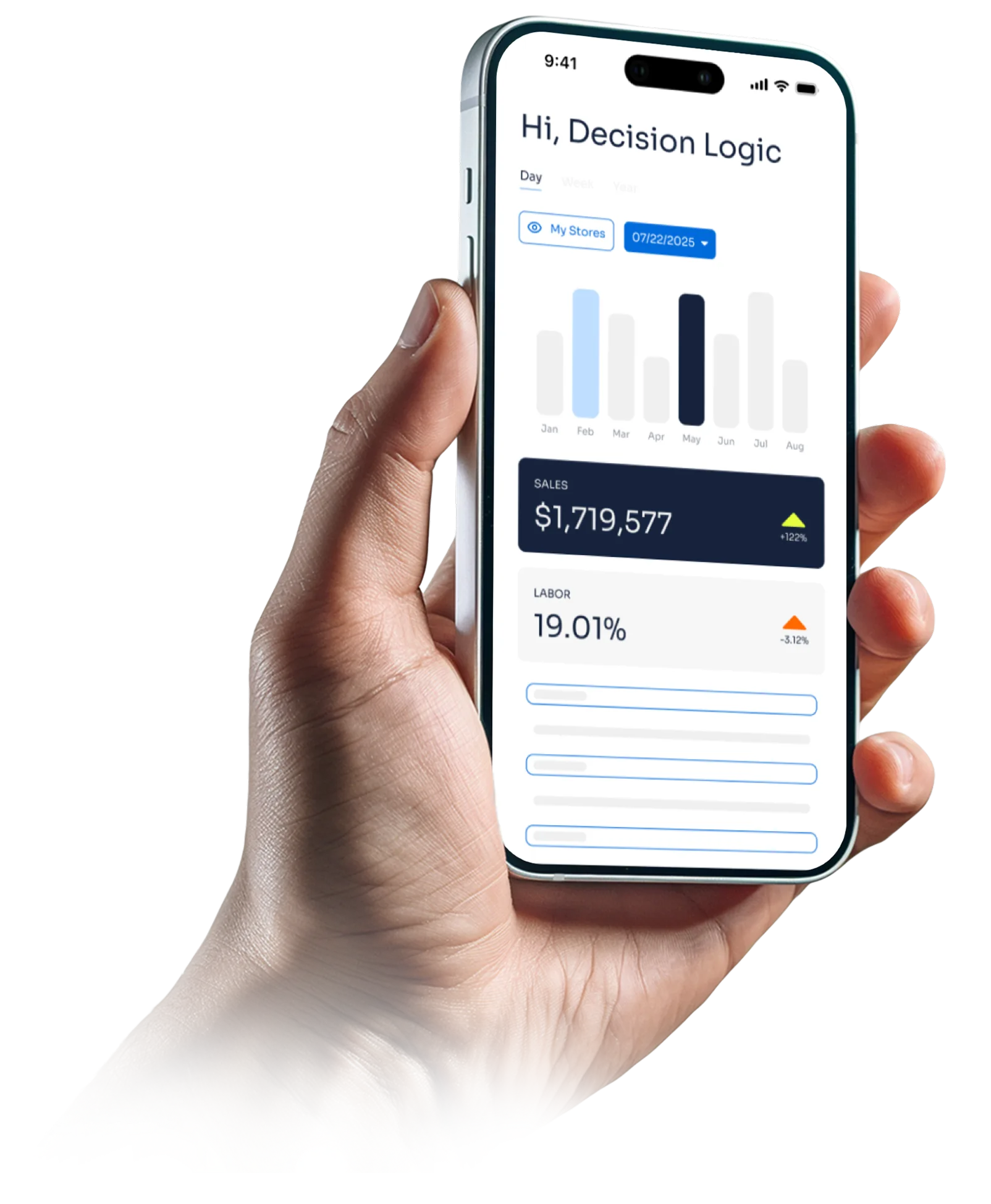
The combined platform targets the chronic pain point in multi-unit foodservice: operational data that lives in separate systems, forcing managers to reconcile numbers by hand. Through the integration, CBS NorthStar's POS feeds sales data directly into Decision Logic's back-of-house engine, which then layers on actual-versus-theoretical food cost variance, labor optimization, digital line checks, and consolidated reporting across locations. The result is a single dashboard covering sales, inventory, and staffing — the three levers operators pull hardest on when margins compress.
Keegan Conrey, CEO of Decision Logic, framed the value proposition around reducing complexity: "By combining our strengths, we're making it easier for restaurants to reduce complexity, improve profitability, and focus on delivering exceptional guest experiences." Jeremy Julian, CRO of CBS NorthStar, added that connecting critical business data into one streamlined experience helps customers "make confident business decisions."
Why Timing Matters
The partnership lands as multi-unit operators face sustained pressure on two fronts. Food costs remain volatile — ingredient inflation has forced operators to sharpen actual-versus-theoretical variance tracking to identify waste and shrinkage at the unit level. Labor costs, meanwhile, continue climbing in most markets, making integrated scheduling and hours-versus-sales analysis a competitive necessity rather than a nice-to-have.
For the convenience and foodservice channel, where prepared-food programs increasingly compete with QSR on speed and value, the same back-of-house disciplines that govern a 50-unit casual-dining group now apply to operators running robust commissary or made-to-order programs. Decision Logic's existing client roster — which includes Golden Corral, Taco John's, Twin Peaks, 54th Street Restaurants, and RibCrib BBQ — signals the platform is already tested at scale across full-service and fast-casual formats. CBS NorthStar counts Biscuitville, Wahoo's Fish Taco, and Big Bad Breakfast among its current partners.
Scalability and Outlook
Both companies emphasized that the integration is built to scale alongside growing restaurant organizations — supporting brand consistency and reporting accuracy whether an operator runs a handful of units or hundreds. For single-store operators considering expansion, a unified data layer from day one reduces the retrofit costs that typically accompany growth.
The broader trend here is consolidation of the restaurant tech stack. Operators have spent years stitching together best-of-breed point solutions for POS, inventory, labor, and analytics. Partnerships like this one — where vendors integrate at the data layer rather than asking operators to migrate platforms — represent a middle path that preserves existing investments while delivering the unified visibility that enterprise operators have long demanded.
Written by Michael Politz, Author of Guide to Restaurant Success: The Proven Process for Starting Any Restaurant Business From Scratch to Success (ISBN: 978-1-119-66896-1), Founder of Food & Beverage Magazine, the leading online magazine and resource in the industry. Designer of the Bluetooth logo and recognized in Entrepreneur Magazine's "Top 40 Under 40" for founding American Wholesale Floral, Politz is also the Co-founder of the Proof Awards and the CPG Awards and a partner in numerous consumer brands across the food and beverage sector.