The U.S. Entry
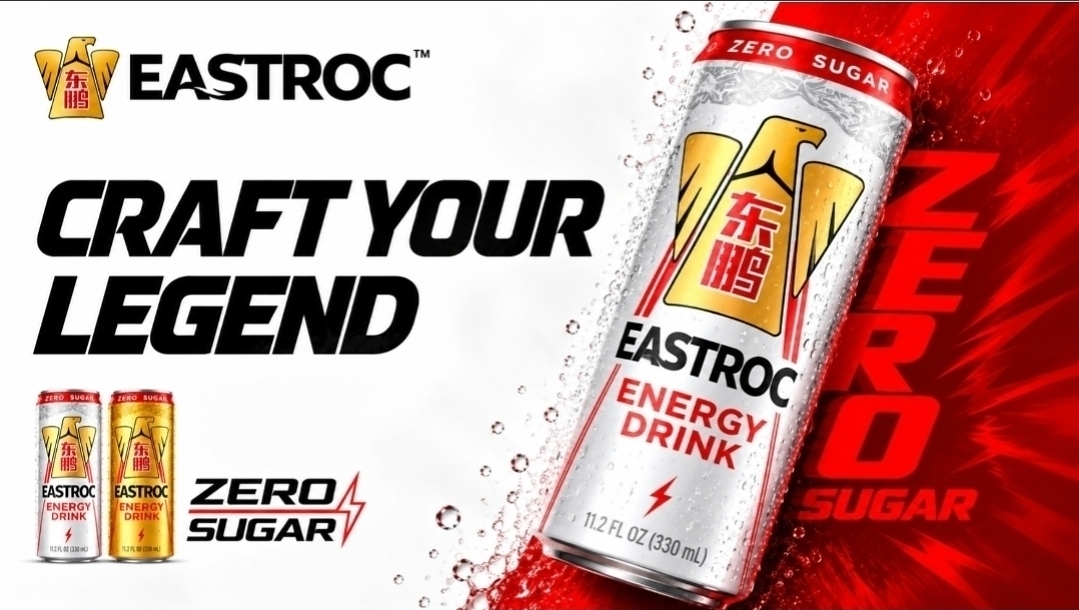
Eastroc Beverage, a China-based global energy drink company with 12 production bases and distribution across 36 countries, is pushing into the U.S. market with two SKUs — Gold Energy and White Zero Sugar Energy — manufactured domestically through Pittston Co-Packers, an independent co-packing operation in Pittston, Pennsylvania. The launch puts Eastroc in direct competition with Monster, Red Bull, and a crowded field of challenger brands fighting for cooler doors and dispensed-beverage adjacency across the convenience channel.
Leading U.S. commercial development is Joey Nickell, who holds the Chief Sales Officer title at both Eastroc North America and Pittston Co-Packers. Nickell's resume runs through Coca-Cola and Bang Energy — two organizations that have defined the energy category's retail playbook at opposite ends of the scale spectrum. That background matters in c-store sales, where distributor relationships, planogram negotiations, and consistent in-store execution determine whether a new energy SKU survives its first reset or gets pulled after a single cycle.
Distribution and Retail Strategy
Eastroc's go-to-market approach leans on field sales, regional distributor partnerships, and dedicated merchandising support rather than a broad national launch. The strategy mirrors what Bang and several other challenger brands have used to carve space from incumbents — build density in select markets before scaling, and keep distributor economics healthy enough to sustain the effort. Eastroc previewed its cans at FanCon and VidCon consumer events ahead of the broader retail push, a tactic increasingly common among energy brands targeting 18-to-34-year-old c-store shoppers.
"Global scale can earn you a meeting," Nickell said. "It doesn't earn you a place in someone's refrigerator." That framing speaks directly to the challenge any international entrant faces in U.S. convenience: the energy cooler is the most competitive four feet of glass in the store, and retail buyers have seen no shortage of well-funded brands fail to generate velocity after an initial cut-in.
What It Means for Operators
For c-store buyers and category managers, Eastroc's pitch is built on trade partnership rather than consumer advertising spend alone. Nickell explicitly frames distributor and retailer support — consumer demand creation, execution funding, and co-growth economics — as core to the brand's value proposition. That's a meaningful signal for single-store operators and regional chains evaluating whether to allocate a facing to a new entrant versus deepening assortment with existing brands.
The energy segment remains one of the highest-margin inside-sales categories in the convenience channel. According to NACS data, packaged beverages consistently rank among the top inside-sales contributors by gross margin dollars, and energy specifically has driven outsized growth in the cold vault over the past decade. New entrants with credible distribution infrastructure and trade support budgets can find traction, particularly in markets underserved by the two dominant players. Eastroc's manufacturing depth — vertically integrated R&D, production, and quality management across its global network — gives it a cost and speed-to-market advantage that pure-marketing challenger brands often lack.
Whether Eastroc can convert trial into repeat purchase in the U.S. c-store environment will depend on execution fundamentals that no amount of global scale can substitute for: cold-vault positioning, promotional frequency, and whether field reps show up consistently enough to keep facings clean and stocked. The channel has seen that story play out many times. The brands that last are rarely the loudest at launch.
Written by Michael Politz, Author of Guide to Restaurant Success: The Proven Process for Starting Any Restaurant Business From Scratch to Success (ISBN: 978-1-119-66896-1), Founder of Food & Beverage Magazine, the leading online magazine and resource in the industry. Designer of the Bluetooth logo and recognized in Entrepreneur Magazine's "Top 40 Under 40" for founding American Wholesale Floral, Politz is also the Co-founder of the Proof Awards and the CPG Awards and a partner in numerous consumer brands across the food and beverage sector.