The Placement
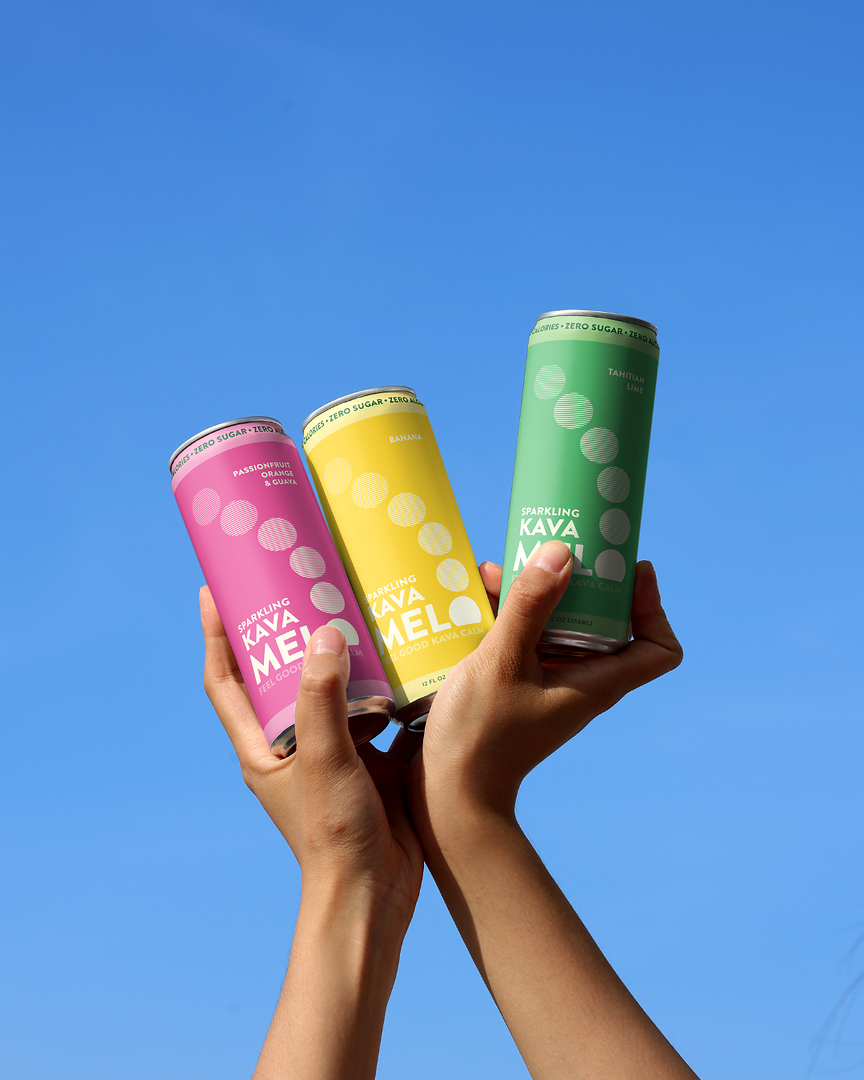
Melo, an Australian-founded sparkling kava brand built in the U.S., landed shelf space in all 13 Erewhon Market locations across Southern California on Oct. 30, marking the brand's highest-profile retail placement to date. Two of its three SKUs — Passionfruit Orange & Guava and Tahitian Lime — are stocking the functional beverage coolers in 12-fl.-oz. cans. The products are zero-sugar, zero-calorie, non-alcoholic, vegan, and gluten-free, made with noble kava sourced from family-owned farms in Vanuatu.
The Category Angle
The Erewhon add is less about one brand than about where the functional beverage set is heading. Energy and focus drinks built the functional cooler door over the past decade, but buyer interest is visibly rotating toward calm and stress-relief positioning — a subcategory that kava, adaptogens, and low-dose botanicals are competing to own. For c-store buyers watching dispensed-beverage and functional-drink velocity, the Erewhon placement is a signal worth tracking: natural-channel velocity at premium grocery often predicts which items migrate to convenience and drug over the following 12–18 months.
"For a decade, the functional beverage market has run on the go, go, go mentality of energy drinks, but now what people actually want is permission to slow down," said Amy Betts, co-founder and CEO of Melo. "Kava has done that job for centuries; it just needed a format that fit a modern shelf."
Sourcing and Supply Chain
Melo differentiates on ingredient provenance — a detail that resonates with Erewhon's certified-organic retail positioning and increasingly matters to wellness-oriented consumers at the c-store tier as well. The brand works directly with family farms in Vanuatu and holds status as an official private-sector partner of the UN and International Trade Centre's Pacific Islands Kava Initiative, a program aimed at raising quality standards and connecting kava-growing communities to export markets. That supply-chain transparency mirrors what better-for-you beverage brands have used to justify premium price points in convenience — roughly $4–6 per unit at natural retail — before broadening distribution.
Prior to the Erewhon launch, Melo was already available through Amazon, Thrive Market, Raley's, Bristol Farms, Lassen's, BevMo!, and Gopuff. The brand has flagged plans to expand into additional retailers through 2027, though specific chains have not been named. The Erewhon footprint — 13 of the chain's 14 Southern California doors — gives Melo meaningful regional concentration to build scan data before approaching larger-format or multi-region buyers.
For convenience operators evaluating the relaxation-drink shelf, the category dynamic is real: kava bars have operated as proof-of-concept for the ingredient's consumer appeal for years, but the RTD format — shelf-stable, portable, merchandisable in a standard cooler door — is what unlocks channel scalability. Whether that translates to c-store velocity depends largely on price sensitivity and consumer education at the point of sale, two variables that natural-grocery velocity helps establish.
Written by Michael Politz, Author of Guide to Restaurant Success: The Proven Process for Starting Any Restaurant Business From Scratch to Success (ISBN: 978-1-119-66896-1), Founder of Food & Beverage Magazine, the leading online magazine and resource in the industry. Designer of the Bluetooth logo and recognized in Entrepreneur Magazine's "Top 40 Under 40" for founding American Wholesale Floral, Politz is also the Co-founder of the Proof Awards and the CPG Awards and a partner in numerous consumer brands across the food and beverage sector.