Red Robin Gourmet Burgers posted a 3.9% comparable-restaurant revenue gain in its fiscal third quarter ended October 4, 2026 — a sharp reversal from the 1.3% decline recorded in the same period a year earlier — while simultaneously completing the most consequential refranchising wave in the chain's recent history. The results mark the clearest evidence yet that CEO Dave Pace's 18-month-old First Choice Plan is gaining traction at the unit level, even as GAAP losses widen from transaction costs tied to the balance-sheet overhaul.
The Operating Numbers
Restaurant-level operating profit margin reached 10.8% for the quarter, up 90 basis points year over year, driven by pricing actions, labor efficiencies, and cost savings. Total restaurant revenue came in at $222.2 million, down from $260.9 million in the prior-year period — a decline that reflects the removal of company-owned locations transferred to franchisees rather than underlying demand softness. Adjusted EBITDA held essentially flat at $7.3 million versus $7.6 million a year ago, as incremental selling spend behind the Big Yummm value platform and First Choice marketing absorbed the margin gains at the restaurant level. Net loss for the quarter was $21.2 million, compared with $18.4 million in Q3 2025, with the increase driven largely by refranchising-related charges and a $3.7 million loss on debt extinguishment.
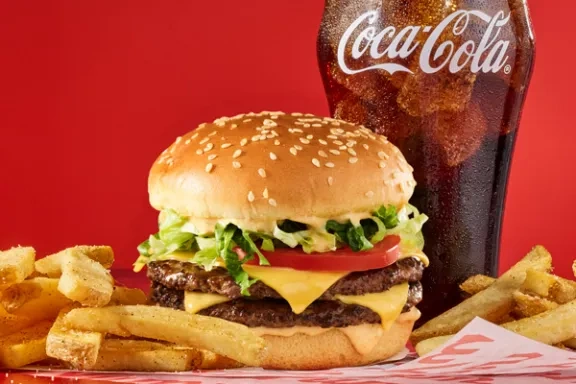
The comparable-sales breakdown tells a familiar casual-dining story: average guest check climbed 5.6% — partly aided by lapping the July 2025 launch of the Big Yummm value platform — while guest traffic slipped 1.7%. The chain is trading frequency for ticket, a tradeoff that has kept comps positive but leaves traffic recovery as the unfinished item on the turnaround agenda. For the forty-week year-to-date period, comparable-restaurant revenue is up 1.5%.
The Refranchising Math
During Q3, Red Robin completed the sale of 108 company-owned restaurants through three transactions — 30 units to Evergreen Dining LLC, 61 units to Op Burgers LLC, and 17 units to Kuber Oregon LLC and Kuber Washington LLC — for aggregate cash consideration of approximately $89.4 million. After quarter-end, Op Burgers acquired six additional locations for roughly $4.8 million, with two remaining units expected to close before fiscal year-end pending liquor-license transfers. The refranchising proceeds funded significant debt reduction and supported the October 2 refinancing of the company's existing credit facility with a new $115.0 million structure: a $90.0 million term loan and a $25.0 million revolving line of credit maturing in October 2031. Outstanding borrowings under the new facility stood at $100.0 million as of quarter-end, with total liquidity of approximately $29.5 million.
The strategic logic mirrors moves made by other casual-dining operators navigating post-pandemic cost structures in the foodservice sector: shed owned units to reduce capital intensity, collect royalty and franchise revenue from operators with local expertise, then redeploy proceeds to strengthen the balance sheet. For Red Robin, the shift also shrinks the company-owned restaurant footprint it must manage through ongoing cost-inflation headwinds in food and labor — pressures that remain acute across the broader restaurant and hospitality industry.
What Comes Next
For the fourth quarter, management guided comparable-restaurant revenue growth of approximately 2.75%, restaurant-level operating profit margin of roughly 10.0%, and adjusted EBITDA of approximately $6.0 million. The Q4 outlook includes an estimated $1.5 million in general liability expense tied to the recently refranchised restaurants — a transition cost the company expects to work through as the new franchisee relationships mature. Management also flagged that the current overhead structure does not yet reflect full run-rate savings from operating a higher proportion of franchised locations, suggesting further G&A rightsizing is in the pipeline. With more than 450 Red Robin locations across the U.S. and Canada, and the Red Robin Royalty loyalty program underpinning guest engagement, the chain's near-term task is converting improving comp momentum into consistent traffic recovery while executing the overhead optimization that the refranchising strategy was designed to unlock.
Written by Michael Politz, Author of Guide to Restaurant Success: The Proven Process for Starting Any Restaurant Business From Scratch to Success (ISBN: 978-1-119-66896-1), Founder of Food & Beverage Magazine, the leading online magazine and resource in the industry. Designer of the Bluetooth logo and recognized in Entrepreneur Magazine's "Top 40 Under 40" for founding American Wholesale Floral, Politz is also the Co-founder of the Proof Awards and the CPG Awards and a partner in numerous consumer brands across the food and beverage sector.