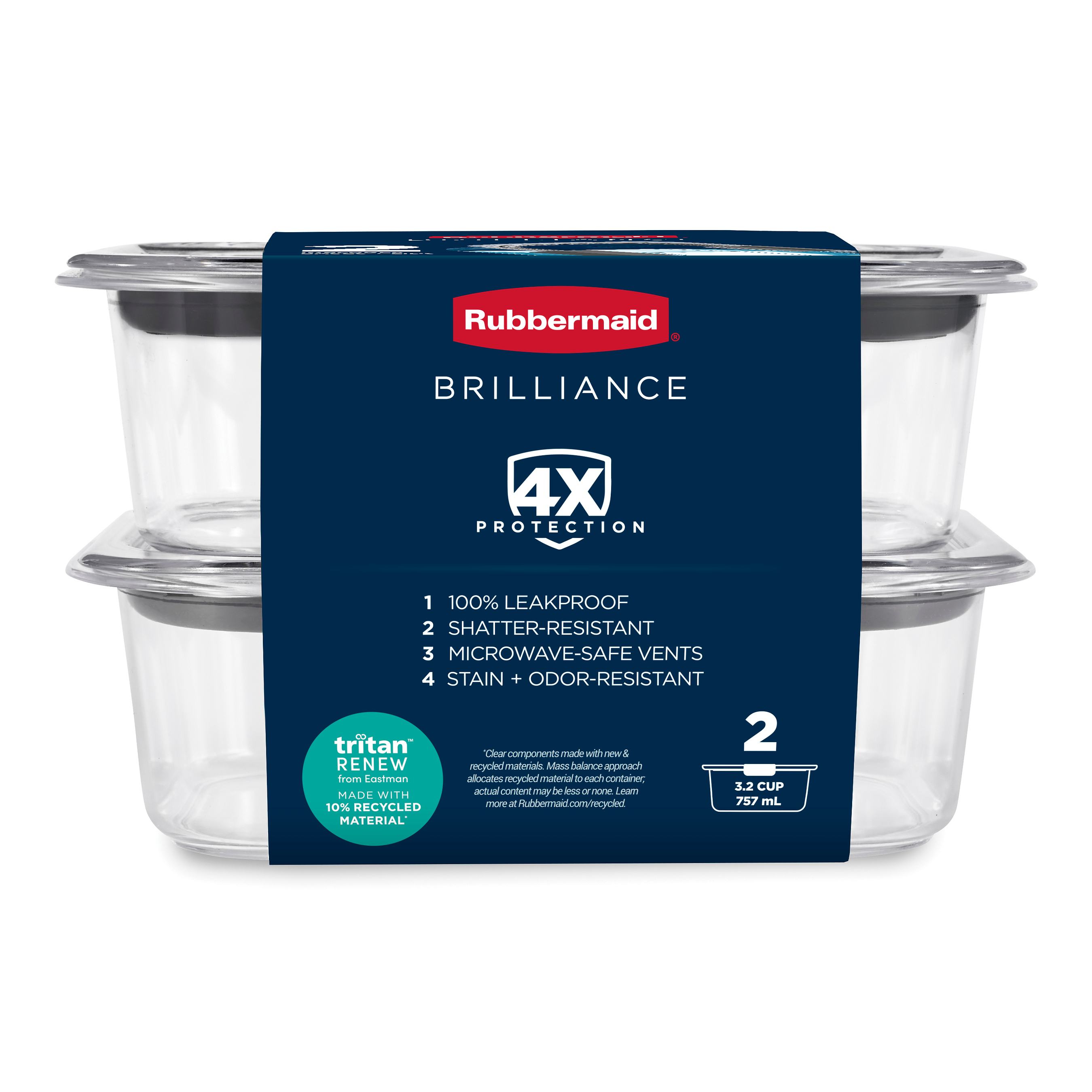
Rubbermaid's Brilliance food storage line entered retail shelves in April 2026 with containers incorporating Tritan Renew from Eastman, a copolyester made with certified recycled content through the chemical maker's molecular recycling technology. The move extends a supplier partnership that dates to 2016, when Brilliance debuted using standard Tritan copolyester.
For convenience retailers and foodservice operators stocking grab-and-go or back-of-house storage solutions, the update signals a quiet but meaningful shift in the food-contact-container supply chain: brand-name storage products are beginning to incorporate post-consumer recycled streams without sacrificing the performance specs — stain, odor, and shatter resistance along with leakproof, microwave-safe lids — that foodservice and food storage buyers depend on.
What Changed in the Mix
The updated Brilliance assortment covers rectangular and round food storage containers as well as pantry containers for dry goods. All clear components are produced using Eastman's mass balance approach, which allocates recycled feedstock across the production run; Rubbermaid acknowledges that actual recycled content in any individual unit may be less than or equal to zero. The brand has published additional detail at Rubbermaid.com/recycled.
Waylon Good, vice president of brand management for Rubbermaid food storage products, said the collaboration with Eastman was aimed at pairing performance with material transparency. Eastman, headquartered in Kingsport, Tennessee, posted approximately $8.8 billion in 2025 revenues and supplies specialty materials across food, beverage, and consumer goods categories.
Channel Implications
For c-store buyers and category managers, the practical consideration is less about sustainability messaging and more about whether the containers hold up in a commercial-adjacent setting — microwave use in break rooms, leakproof performance in cooler cases, and odor resistance after repeated use. On those dimensions, Rubbermaid maintains the Brilliance performance tier is unchanged.
The broader trend toward recycled-content packaging in food storage and foodservice supply categories has picked up momentum as retail buyers increasingly ask suppliers for material provenance documentation. Eastman's mass balance certification model — used widely in advanced recycling across the plastics supply chain — provides a third-party-verified chain of custody even when physical recycled molecules are commingled in production. That approach is becoming a baseline expectation in grocery and convenience procurement conversations.
Rubbermaid Brilliance products with Tritan Renew are currently available at major retailers nationwide.
Written by Michael Politz, Author of Guide to Restaurant Success: The Proven Process for Starting Any Restaurant Business From Scratch to Success (ISBN: 978-1-119-66896-1), Founder of Food & Beverage Magazine, the leading online magazine and resource in the industry. Designer of the Bluetooth logo and recognized in Entrepreneur Magazine's "Top 40 Under 40" for founding American Wholesale Floral, Politz is also the Co-founder of the Proof Awards and the CPG Awards and a partner in numerous consumer brands across the food and beverage sector.