The Promotion
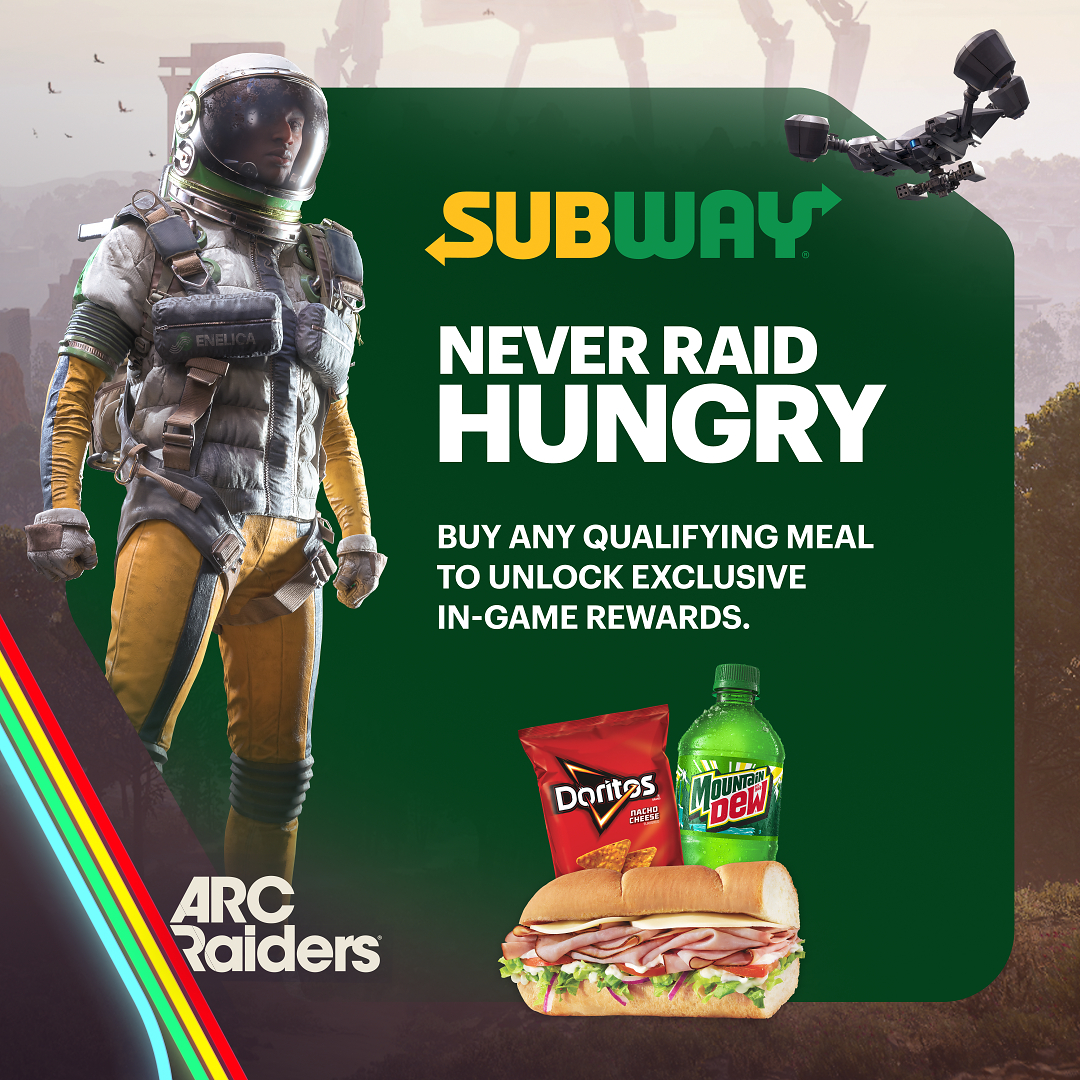
Subway is running a national gaming tie-in with Stockholm-based developer Embark Studios through Oct. 26, attaching exclusive in-game rewards for the extraction title ARC Raiders to any qualifying meal purchase at its more than 35,000 U.S. restaurants. The partnership is timed to the Oct. 8 release of Frozen Trail, the game's largest content update since its 2025 launch.
Guests who buy a qualifying meal — a 6-inch sub, Footlong, salad, or wrap, plus chips or cookies and a drink — receive a unique redemption code. Each code unlocks the exclusive Subterranean character outfit, one of three Subway-branded outfit variants, and two bonus in-game items that rotate weekly for the duration of the campaign. Codes are redeemable on PlayStation, Xbox, and PC through Nov. 10 and must be entered at the program site. Purchases through third-party delivery apps are excluded.
Why It Matters for Operators
For Subway franchisees, the mechanic functions as a structured bundle driver — the qualifying purchase requires a protein item, a side, and a drink, nudging ticket size upward during an otherwise uneven late-summer traffic window. Bundled meal promotions have been a consistent tool across QSR-adjacent foodservice channels; tying a bundle to a digitally distributed reward creates a low-cost incentive structure that costs the brand in licensing rather than margin.
The promotion also runs through the Subway app and subway.com, which feeds loyalty member data capture — a priority for large franchise systems trying to sharpen frequency targeting. PepsiCo snack and beverage brands are embedded in the qualifying meal options, with Doritos Nacho Cheese chips and Mountain Dew called out explicitly, reinforcing a longstanding co-marketing relationship between the two companies. PepsiCo reported nearly $94 billion in net revenue in 2025 across its beverage and convenient-foods portfolio.
Channel Context
Gaming tie-ins have become a recurring traffic lever for large QSR and fast-casual chains, with redemption codes attached to food purchases offering measurable engagement metrics that traditional media buys do not. For c-store operators watching foodservice-at-retail competition, Subway's move illustrates how a franchise system with national scale can activate a digital reward loop across its full location footprint at once — a structural advantage smaller operators and single-store operators lack without a centralized loyalty platform.
Dave Skena, Chief Strategy and Commercial Officer at Subway, described the partnership as giving players "something new to discover throughout the campaign," signaling that the weekly-rotating reward structure is intentional retention design rather than a one-time stunt. Ashley St. Germain, Marketing Director at Embark Studios, noted the collaboration was a "natural fit" for a game built around preparation and gear acquisition.
For operators tracking dispensed beverage and bundle trends, the Subway-Embark structure is worth monitoring: bundle mechanics that tie a digital consumer reward to a specific drink-plus-side combination have shown durable attach rates in comparable QSR programs.
Written by Michael Politz, Author of Guide to Restaurant Success: The Proven Process for Starting Any Restaurant Business From Scratch to Success (ISBN: 978-1-119-66896-1), Founder of Food & Beverage Magazine, the leading online magazine and resource in the industry. Designer of the Bluetooth logo and recognized in Entrepreneur Magazine's "Top 40 Under 40" for founding American Wholesale Floral, Politz is also the Co-founder of the Proof Awards and the CPG Awards and a partner in numerous consumer brands across the food and beverage sector.