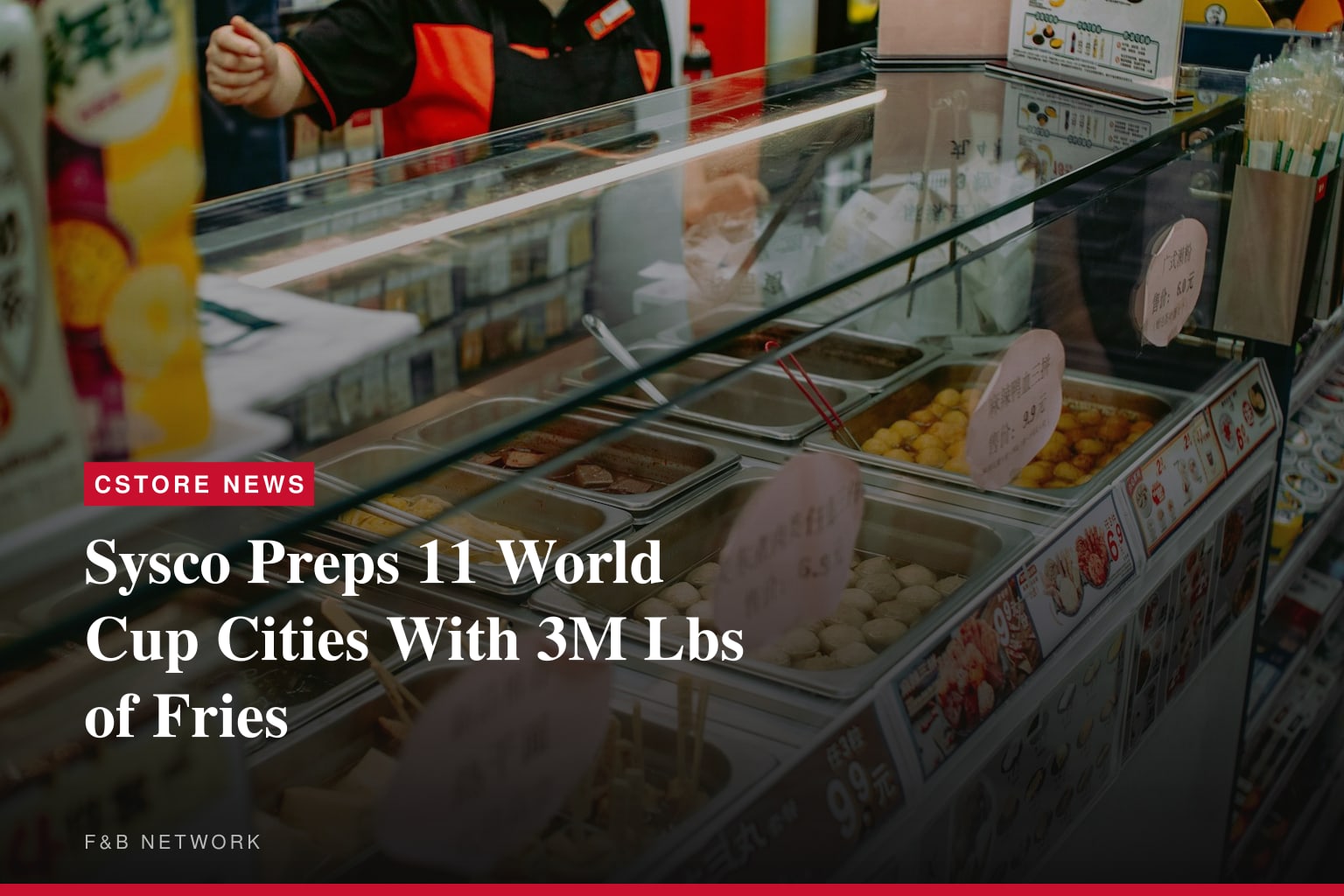
Sysco Corporation is betting big on the 2026 FIFA World Cup, deploying expanded fleet capacity, beefed-up inventory, and additional headcount across all 11 U.S. host cities to handle the foodservice surge expected when nearly 5 million international and domestic visitors descend on American markets this summer. The distributor says preparations began months ago and include at least 3 million extra pounds of french fries staged for the event window.
For convenience operators in those host cities — Houston, Dallas, Los Angeles, San Francisco, Seattle, Kansas City, Boston, New York/New Jersey, Philadelphia, Miami, and Atlanta — the World Cup represents an outsized demand spike across dispensed beverages, roller-grill programs, packaged snacks, and cold-vault single-serve beverages. Traffic surges tied to major sporting events have historically lifted inside-sales comps at nearby c-stores by double digits during game days, according to operator reports tracked by NACS.
Sysco's scale matters to the channel because a significant share of c-store foodservice programs — particularly at regional chains and single-store operators — rely on broadline distribution for proteins, frozen sides, and condiments. Any supply disruption or allocation squeeze during a demand spike of this magnitude could pressure back-of-house programs at exactly the moment foot traffic peaks. The distributor's proactive fleet expansion is designed to prevent that scenario.
The fries figure alone underscores how calorie-dense, grab-and-go formats dominate event foodservice. Fried potato SKUs are a staple of c-store roller-grill and hot-case sets, and operators in host markets would be well-served to audit par levels and confirm delivery windows with their broadline or DSD reps ahead of the tournament's group-stage run. Loyalty program promotions tied to game-day bundles — a combo of a hot food item and a dispensed beverage, for instance — have shown strong attachment rates at chains that have piloted them around NFL and NCAA events.
The broader foodservice-at-cstore trend provides context: NACS data show prepared food and dispensed beverage now account for roughly 23% of in-store gross profit dollars industrywide, up from the high teens a decade ago. A short-term traffic catalyst like the World Cup can accelerate trial of a store's foodservice program among visitors who might never have stopped otherwise — making execution quality during the tournament a longer-term brand play for operators in host markets.
Written by Michael Politz, Author of Guide to Restaurant Success: The Proven Process for Starting Any Restaurant Business From Scratch to Success (ISBN: 978-1-119-66896-1), Founder of Food & Beverage Magazine, the leading online magazine and resource in the industry. Designer of the Bluetooth logo and recognized in Entrepreneur Magazine's "Top 40 Under 40" for founding American Wholesale Floral, Politz is also the Co-founder of the Proof Awards and the CPG Awards and a partner in numerous consumer brands across the food and beverage sector.