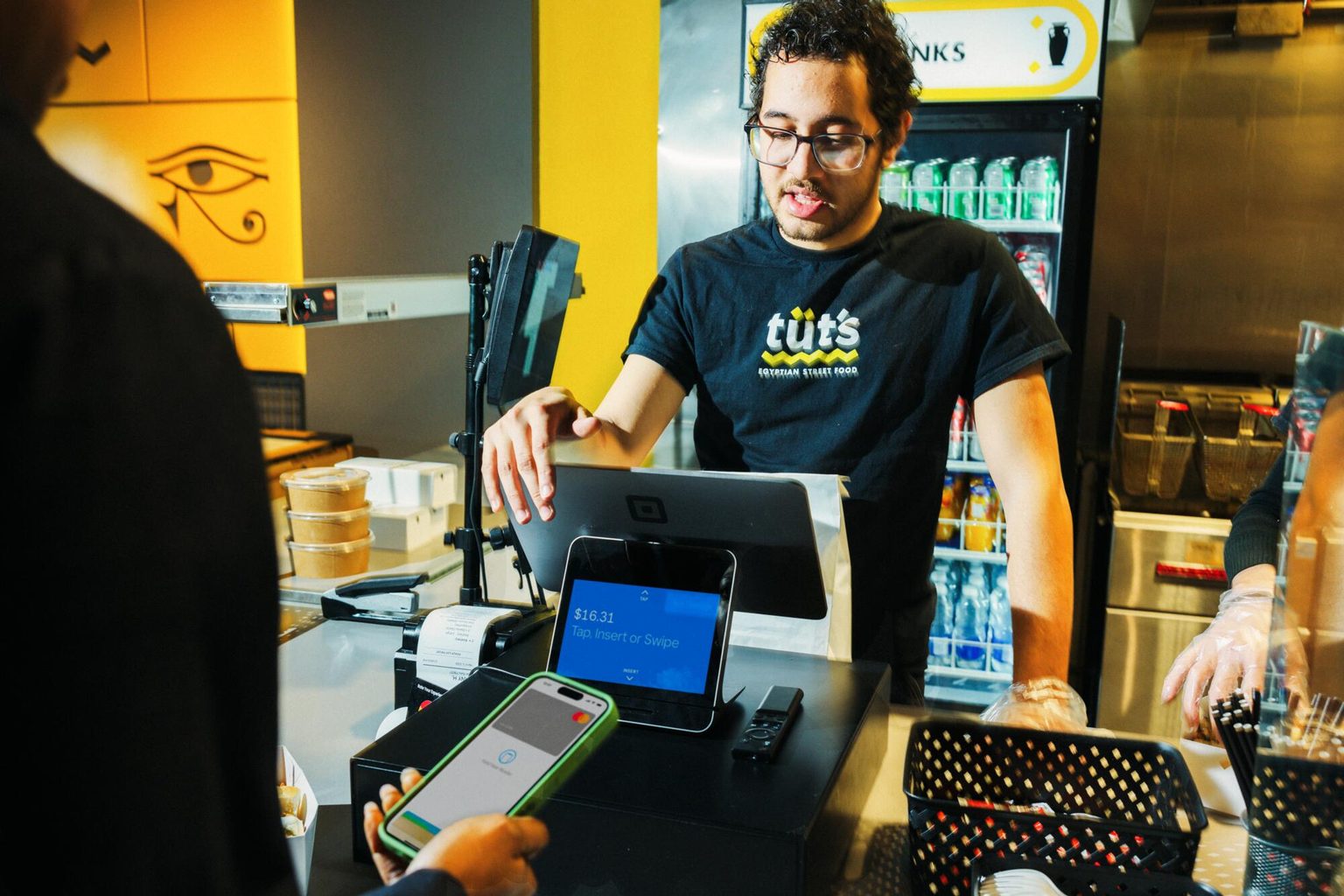
For convenience store retailers, every transaction matters. Margins are tight, inventory turns fast, and customer expectations shift by the week. Yet many c-store operators still rely on fragmented systems—a POS that doesn't talk to inventory, inventory that doesn't connect to customer data, and customer data that sits isolated from merchandising decisions. This disconnection is expensive. It creates waste, missed opportunities, and operational friction that eats directly into the bottom line.
Square has emerged as a platform addressing exactly this problem. What began in 2009 as a mobile payment solution has evolved into a comprehensive commerce ecosystem spanning in-person payments, inventory management, customer engagement, and real-time analytics. For c-store operators managing impulse categories, grab-and-go volume, and fast-SKU velocity, this integration matters in concrete ways: you can see what's selling in real time, understand which products drive margin, and adjust shelf placement and promotion instantly based on actual performance.
The core advantage for c-store retailers is consolidation. Rather than stitching together standalone tools, Square collapses multiple systems into one cohesive platform. A category buyer can track inventory across locations, monitor sales velocity by product and planogram, identify slow-moving SKUs, and execute data-driven merchandising decisions without toggling between three different screens. For chains managing hundreds of locations and thousands of SKUs, this operational clarity translates directly to reduced shrink, better sell-through, and smarter capital allocation.
Impulse, Grab-and-Go, and Real-Time Inventory Visibility
C-store success depends on understanding what drives impulse purchases and grab-and-go conversion. Convenience store retailers need visibility into which products move fastest at what times of day, which planograms drive higher basket rings, and where stockouts are happening before they damage sales. Square's integrated platform provides exactly this. At the point of sale, every transaction is captured and immediately visible in the back office. A category buyer can see at 10 a.m. that energy drinks are outselling water 3-to-1 on Tuesday mornings and adjust orders or shelf position accordingly—before the weekend when velocity spikes.
This real-time intelligence extends to customer behavior. By unifying transaction data across locations, c-store chains can identify patterns in what sells together, what sells at specific dayparts, and which merchandising changes actually move the needle. For impulse categories—snacks, beverages, prepared food—this data-driven approach replaces guesswork with evidence, making every planogram decision and promotional placement measurable.
Van Leeuwen Ice Cream illustrates this principle in a different channel but with direct relevance to c-store operations. What started as a single scoop truck grew into a nationally recognized brand with multiple retail formats and distribution. This growth required infrastructure that unified point-of-sale transactions, inventory across channels, and customer insights. For Van Leeuwen, the ability to track which products perform in which locations, understand inventory needs across formats, and maintain brand consistency while scaling was essential. The same logic applies to c-store chains and category buyers: integrated data enables smarter merchandising, faster decisions, and stronger margins.
Democratizing Commerce Infrastructure for Independent and Multi-Unit Operators
Not every convenience store is a large chain. Independent operators and small chains have historically lacked access to the commerce infrastructure that major retailers take for granted—sophisticated POS systems, integrated inventory management, and customer data analytics. These tools were expensive, required long-term contracts, and demanded technical expertise most smaller operators didn't have.
Square has removed those barriers. By eliminating high upfront costs, long-term contracts, and technical complexity, the platform has made sophisticated commerce tools accessible to independent convenience store retailers and smaller chains. This democratization matters: it allows operators at every scale to compete on data and operational efficiency, not just on brand or location. An independent c-store operator can now run inventory, manage vendors, and track customer trends with the same infrastructure sophistication as a large chain.
For c-store category buyers managing relationships with independent and multi-unit operators, this shift is significant. It means partners can access better data, execute faster, and respond to market changes more quickly. A category buyer working with 500 independent c-stores that use fragmented POS systems gets inconsistent data. The same buyer working with operators on Square gets real-time visibility into what's selling, where, and why—enabling better forecasting, smarter promotions, and stronger sell-through across the entire network.
Building Smarter Merchandising With Data
Square's platform increasingly incorporates artificial intelligence and predictive analytics. For c-store operators and category buyers, this translates into more intelligent merchandising. Real-time data on local trends, customer behavior, and external factors—weather, events, seasonality—can inform everything from inventory stocking decisions to planogram adjustments to promotional timing. This moves c-store operations beyond reactive management (responding to stockouts, reordering after sales spike) into proactive strategy (forecasting demand, positioning product ahead of peaks, allocating margin-accretive SKUs to high-velocity locations).
For convenience store retailers, the ability to move beyond gut feel and toward data-driven decisions in fast-moving categories directly impacts profitability. If a category buyer can see that a particular snack SKU generates higher margin but slower turn in urban locations and lower margin but faster turn in highway travel plazas, that insight enables smarter allocation and better overall margin dollars. That intelligence requires integration—data from POS, inventory, location characteristics, and customer behavior flowing into a single platform where patterns become visible.
Setting New Standards for C-Store Operations
Square's evolution reflects a broader shift in how commerce infrastructure is built and deployed. Competitors are now judged not just on fees or hardware design, but on their ability to deliver integrated, end-to-end solutions. For the convenience store sector, this evolution matters profoundly. C-store operators face intensifying demands: manage margins, reduce shrink, speed up service, stock thousands of SKUs, and respond to rapidly shifting consumer preferences for healthy options, premium products, and digital payment.
These demands require infrastructure that unifies front-of-store transactions with back-office inventory and customer data. Square's ability to do this—seamlessly connecting POS, inventory management, customer engagement, and analytics—offers c-store retailers a blueprint for how technology can reduce friction and improve decision-making. It allows operators to focus less on managing disparate systems and more on strategic merchandising, vendor relationships, and category management.
For c-store category buyers specifically, this matters in tangible ways: you can provide vendors with better sell-through data, negotiate from a position of real market intelligence, and make faster decisions about which products deserve shelf space and which need to be delisted. You can see, in real time, what's working in your chain and replicate it. You can identify regional preferences and adjust assortment without waiting for month-end reports.
As the convenience store sector continues to evolve—merging quick-service food, packaged goods, fuel, and increasingly digital services—operators will need infrastructure that is equally adaptable. Platforms that can unify multiple formats, multiple payment types, and multiple data streams while remaining simple enough for front-line cashiers to use will define competitive advantage.
Square is positioned at that intersection. For c-store retailers and category buyers seeking to operate with greater efficiency, faster decision-making, and smarter merchandising, integrated commerce platforms represent the next evolution in how convenience stores compete. By consolidating technology, simplifying operations, and providing real-time visibility into what actually sells, these platforms help convenience store operators focus on what matters most: driving impulse sales, optimizing grab-and-go, and building margin in every transaction.