The 45th parallel runs through Bordeaux, Piedmont, and the world's most celebrated wine regions. It also cuts straight through northwest Michigan, home to the Traverse Wine Coast—and retailers who haven't been stocking it are missing a fast-moving category opportunity.
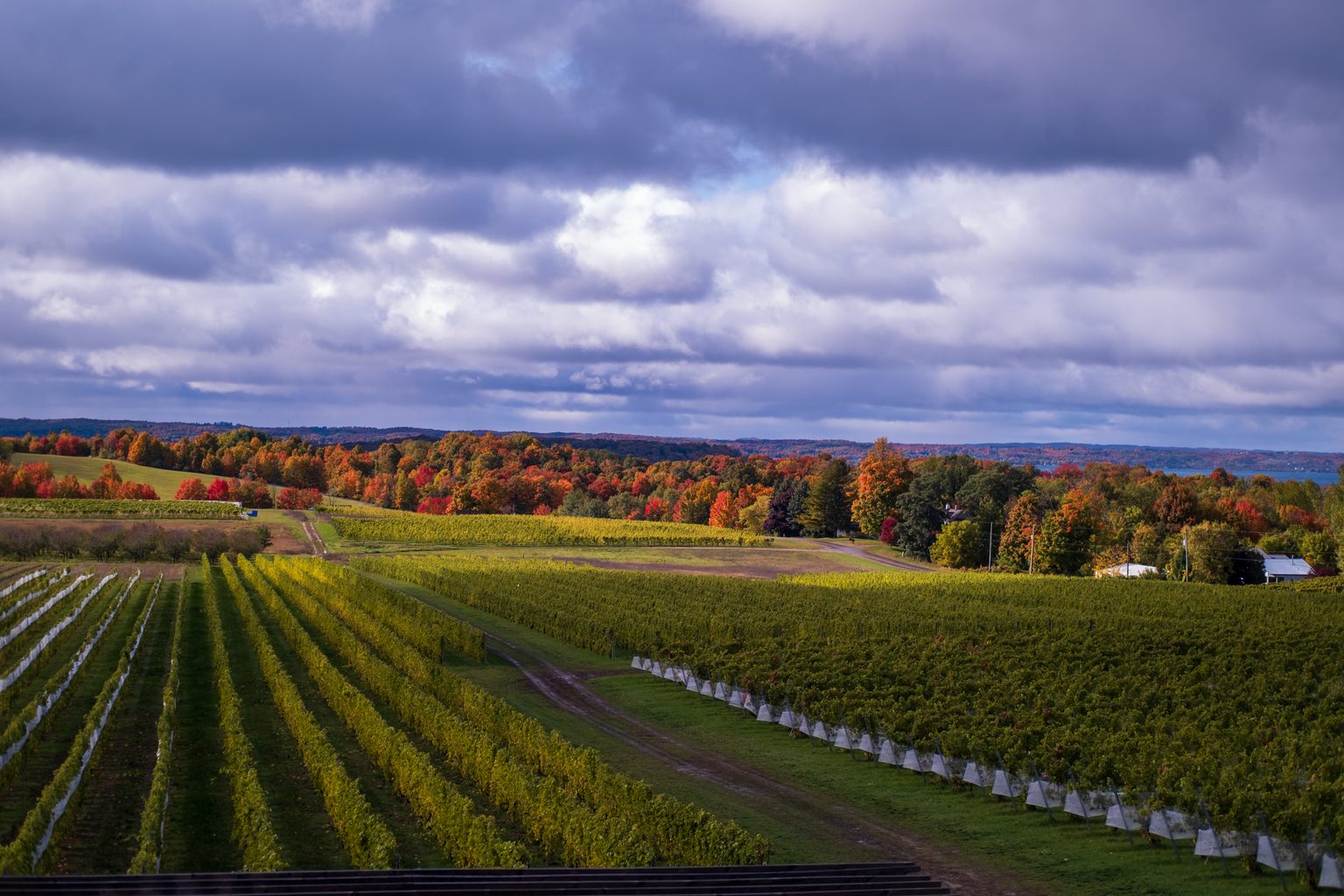
The region encompasses the wineries of the Leelanau and Old Mission Peninsulas, two distinct landmasses shaped by glacial movement and buffered by the deep, cold waters of Lake Michigan and Grand Traverse Bay. That water is the key. It moderates temperature, softens frost risk, and stretches the growing season just long enough for grapes to develop slow, even maturation that produces wines with bright acidity, concentrated aromatics, and balance that shoppers recognize immediately—the exact profile that drives impulse purchases at checkout.
High-Velocity SKUs: Old Mission Peninsula
Old Mission Peninsula produces Cabernet Franc of surprising elegance, Gewurztraminer that leans floral without tipping into excess, and sparkling wines with tension that makes repeat purchase inevitable. The well-drained sandy soils and nineteen-mile geography create distinctive bottlings that stand out on crowded shelves—the visual and taste differentiation that grab-and-go shoppers notice in seconds.
Premium Riesling and Chardonnay: Leelanau Peninsula
On the Leelanau Peninsula, glacial soils produce Riesling competitive with German benchmarks, alongside Chardonnay and Pinot Noir that earn comparison to cooler-climate Burgundy. Most wineries ship directly, and the ones that don't partner with distributors who do. For c-store category buyers, this means consistent supply chains, reliable SKU availability, and wines that move because consumers actively seek them by name and region.
Merchandising Advantage: Story-Driven Sales
The Traverse Wine Coast comparison to Napa or Sonoma works as a merchandising frame—familiar reference point, but a region still being written, which retailers can emphasize to drive discovery. The 45th parallel positioning, the Lake Michigan terroir story, and the peninsula geography give staff talking points that convert browsers to buyers. Farm-to-table culture and food-wine pairings position these bottles as premium grab-and-go merchandise, not commodity wine.
This August, the second annual Traverse City Food & Wine Event draws James Beard-recognized chefs and wines from both peninsulas—the kind of regional recognition that builds consumer demand and floor traffic. Over twenty direct flights connect the region to major cities, and Chicago sits within a five-hour drive, meaning vacation-minded shoppers arrive with wine region familiarity and purchasing intent.
The point: Traverse Wine Coast bottles earn shelf space through distinctive terroir, reliable quality, strong regional positioning, and consumer pull that c-store buyers recognize as margin-friendly velocity.
Traverse Wine Coast spans the Leelanau and Old Mission Peninsulas in northwest Michigan. For planning information, visit traversecity.com/traverse-wine-coast.