The Product
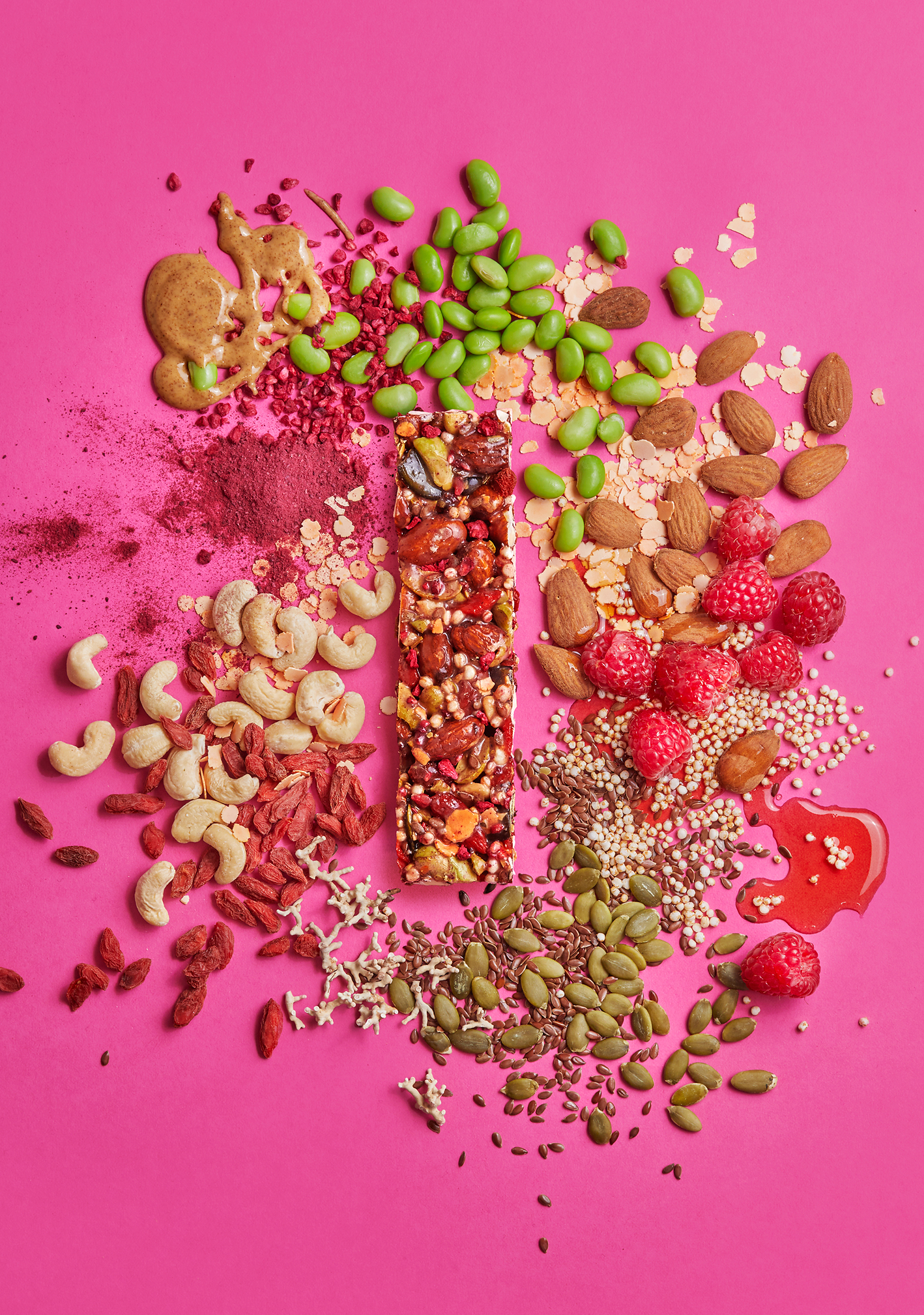
ZOE, the gut health science company behind the PREDICT nutrition studies, has entered the U.S. snack bar category with its new Gut Health Bar — a chewy format containing more than 10 plant ingredients, 8g of fiber, and 7g of plant protein per bar. Two SKUs hit the market simultaneously: 70% Dark Chocolate + Sea Salt and Raspberry + Goji Berry. At launch, bars are available exclusively on ZOE.com at $50 per 12-bar box, or $45 per month on subscription.
The ingredient deck leans heavily on whole-food diversity: almonds, cashews, edamame, red lentils, flaxseeds, pumpkin seeds, seaweed, and kombucha are among the 10-plus plants included. ZOE says natural food structures are preserved to allow ingredients to travel further down the digestive tract, feeding gut microbes and extending satiety — a formulation strategy that stands in contrast to most mass-market protein bars built around isolates and emulsifier-laden coatings.
The Market Case
The launch addresses a well-documented gap in the convenience snack set. National Health and Nutrition Examination Survey data cited by ZOE shows 95% of U.S. consumers snack regularly, with roughly two snacks per day accounting for 24% of daily calorie intake. Yet the dominant snack bar shelf remains crowded with ultra-processed formats high in added sugars and low in dietary fiber — exactly the positioning ZOE is pushing against.
A ZOE-commissioned survey of 1,000 U.S. adults underscores the consumer-education angle: 64% said they had felt misled by marketing claims on food packaging, and 69% said clearer guidance on which foods support health would change their purchasing behavior. Perhaps most telling for operators and buyers evaluating the better-for-you snack segment: 70% of self-described healthy eaters could not identify the recommended daily fiber intake. That knowledge gap creates legitimate shelf-edge storytelling opportunity for the category.
"Snacking itself isn't the issue; it's the quality of what people are eating," said Professor Sarah Berry, Chief Science Officer at ZOE and Professor of Nutritional Sciences at King's College London. "Choosing higher-quality snacks can be one of the simplest dietary strategies for improving health and is linked to more favorable markers of metabolic health."
Operator Angle
For c-store buyers, the immediate distribution picture is direct-to-consumer only — ZOE has not announced retail or foodservice channel availability. But the product's profile maps closely to what the better-for-you snack bracket is chasing: high fiber, recognizable whole-food ingredients, and a short-ingredient-list chocolate coating free of emulsifiers. Comparable premium bars in the $4.00–$4.50 single-unit range have found traction in the grab-and-go cooler and health-forward endcap sets at larger-format c-stores.
ZOE's scientific credibility — built on a microbiome database of more than 300,000 participants — gives the brand a defensible story at shelf, the kind of credential that resonates in the functional food and beverage aisle as operators continue trading up beyond roller-grill staples. Whether ZOE moves into wholesale and convenience distribution channels will be the key watch item for category managers tracking the gut-health snack segment.
Written by Michael Politz, Author of Guide to Restaurant Success: The Proven Process for Starting Any Restaurant Business From Scratch to Success (ISBN: 978-1-119-66896-1), Founder of Food & Beverage Magazine, the leading online magazine and resource in the industry. Designer of the Bluetooth logo and recognized in Entrepreneur Magazine's "Top 40 Under 40" for founding American Wholesale Floral, Politz is also the Co-founder of the Proof Awards and the CPG Awards and a partner in numerous consumer brands across the food and beverage sector.